


Sarah Mills: Birthdays bring a sense of wistfulness and nostalgia
Sarah Mills says getting older isn't for the faint of heart, and turning a year older can make a person think about youn...
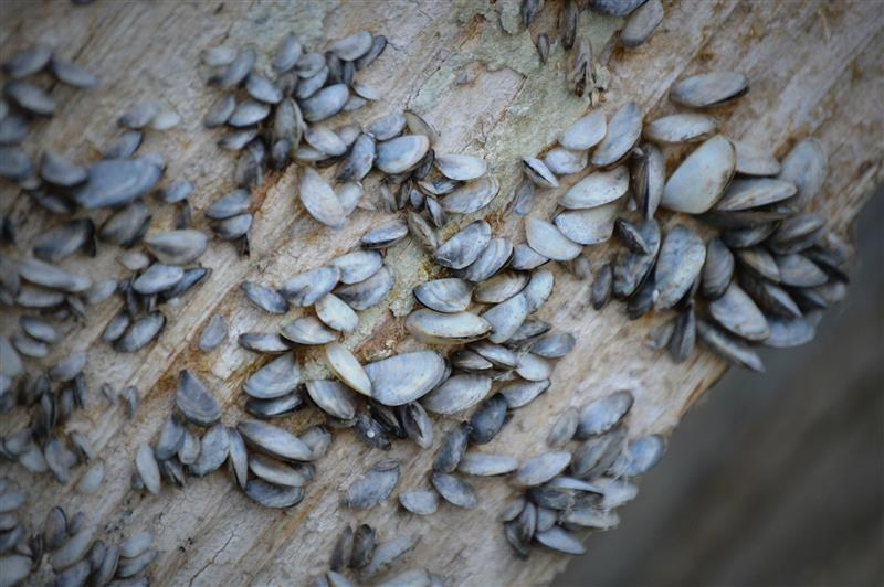
As Saskatchewan looks to keep its waters free of invasive zebra mussels, the provincial government has announced the winner of an innovation challenge focused on aquatic invasive species.
The province said PathoScan, a Saskatoon biotechnology company, has been selected as the winner of its Aquatic Invasive Species Innovation Challenge.
Read more:
The company’s PathoBox — a diagnostic platform developed to help detect disease in crops — will be adapted to help detect zebra mussels and prevent them from spreading in the province, the provincial government said, noting the platform could be adapted to detect other invasive species as well.
The proposal will allow conservation officers and other watercraft inspectors to test water samples collected during roadside inspections and at high-risk locations, the government explained, with results available in just one to two hours.
Saskatchewan’s current monitoring program relies on physical inspections and testing performed in a lab, which the government said can hamper rapid-response efforts.
“PathoScan’s solution brings lab-level molecular testing directly into the field, detecting genetic material released by zebra mussels,” Innovation Saskatchewan said in a statement.
“This technology can identify microscopic larvae and mussels hidden in hard-to-reach areas that may be missed during visual inspections, while reducing testing time and associated costs.”

A boat is inspected at a roadside stop. The new technology “brings lab-level molecular testing directly into the field” during watercraft inspections and testing at high-risk sites, the province said. (Government of Saskatchewan/Submitted)
Warren Kaeding, the minister responsible for Innovation Saskatchewan, said the results show how made-in-Saskatchewan technologies can be used to solve real-world challenges.
“PathoScan’s success demonstrates the value of supporting innovation at every stage, helping promising technologies find new applications and reach new markets,” Kaeding said in a statement.
PathoScan will get a $30,000 grant for winning the challenge, along with a 16-week residency to work directly with the Ministry of Environment to validate the technology. The company received $75,000 in 2024 through the Agtech Growth Fund to support the development of its platform for detecting crop diseases.
Ethan Done, the company’s Chief Operating Officer, said PathoScan is excited to work with the ministry and apply its technology to a new problem.
“This project will help us show how rapid molecular testing can support invasive species detection while validating the technology for broader adoption,” Done said, quoted in a government statement.
The innovation challenge was judged by representatives from a number of stakeholder groups, the government noted, including the Ministry of Parks, Culture and Sport, the Saskatchewan Urban Municipalities Association, the Saskatchewan Association of Rural Municipalities and the Water Security Agency.
This summer, invasive mussel larvae were found in Lake of the Prairies, which straddles the Saskatchewan-Manitoba border, leading to a containment order for the lake.
On July 17, Saskatchewan conservation officers stopped a vehicle towing a boat in Blackstrap Provincial Park, and an inspection determined that the watercraft — which had recently been used in Lake Ontario — contained zebra mussels, standing water and aquatic plant material.
The owner of the boat, an Ontario resident, was charged with transporting a prohibited species under fisheries regulations.




