


Sarah Mills: Investigation into security at Canada's major airports gives pause for thought
Sarah Mills says a W5 investigation into alleged violence, trafficking and organized crime at Canada's busiest airport s...
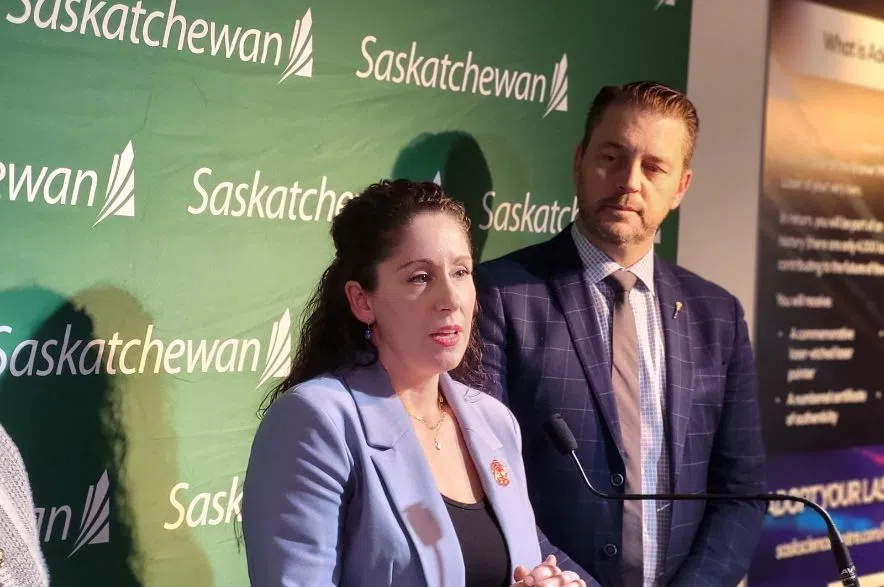
The Government of Saskatchewan unveiled the latest phase of its public awareness campaign about intimate partner violence on Thursday.
Phase 4 of the “Face the Issue” campaign is centred around informing bystanders about what they can do to help victims of violence.
Read more:
“Just something as simple as saying, ‘I noticed what’s going on. I care about you. I’m here for you. Do you want to talk?’ That is so important, and that can change the trajectory of what happens next,” said Dr. Crystal Giesbrecht.
Giesbrecht is the director of research at the Provincial Association of Transition Houses and Services of Saskatchewan (PATHS), the member association for 26 domestic violence shelters and counseling centres.
She stressed the value of making victims feel comfortable.
“This campaign is really important because people may sometimes hesitate to ask or to intervene if they’re not sure they know the right thing to say, or if they’re concerned that if they do bring it up, then they won’t know what to do next,” Giesbrecht explained.
“This is really about showing that you don’t have to have all the answers, and you certainly don’t have to solve it. You have to show up and show that you care and offer support, and then we have services available in this province who can do the rest, who people can get connected to.”
Some of those services include 211 Saskatchewan, a province-wide 24/7 confidential program that helps people identify resources in their community.
While PATHS engages in work like operating emergency shelters and performing outreach, Giesbrecht said it is also important to do preventative work with families, workplaces and young people.
She said the awareness campaign is also about helping people understand warning signs of violence, so they’ll know when to intervene.
As part of the campaign, the province released a video demonstrating examples of how to respond to situations of intimate partner violence.
In 2024, Saskatchewan had the highest rates of police-reported family violence (737 victims per 100,000 people) and intimate partner violence (714 victims per 100,000) among the provinces. Only the territories ranked higher.
“We are looking at another way to help educate people in the communities around interpersonal violence because a big part of our prevention is being able to provide that education,” said Alana Ross, Saskatchewan’s minister responsible for the status of women.
Justice Minister Tim McLeod said the province takes the issue of intimate partner violence “incredibly” seriously, noting that the province has invested $32 million into programs to address intimate partner violence this year.
“It’s a variety of approaches, through intervention, through prevention, but also through some legislative changes to make sure that we’re holding people accountable,” McLeod said, citing measures like Clare’s Law and the recent addition of cyberstalking and coercive control to the definition of interpersonal violence.