


Sarah Mills: Hasn't life become so complicated?
There are apps, reviews, recommendations and endless opinions about how to do everything correctly. Sarah Mills says tha...
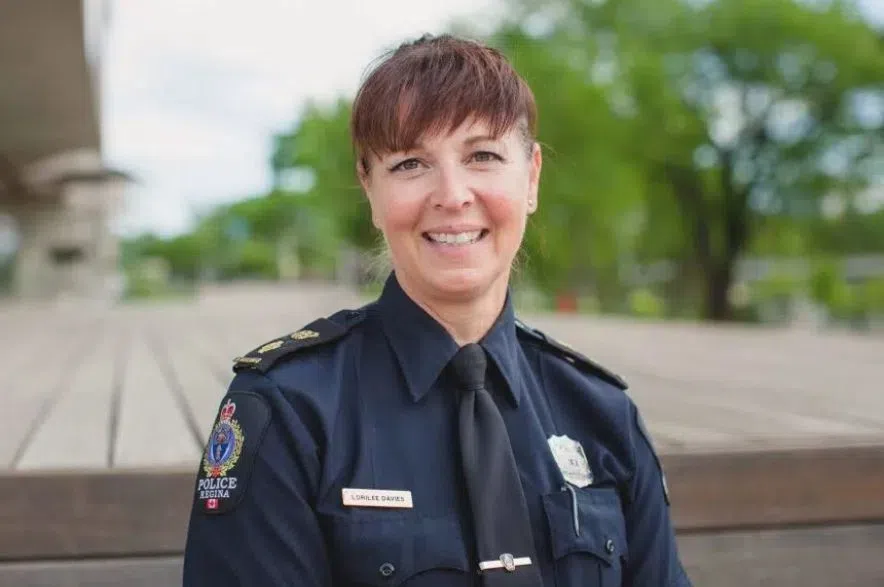
Lorilee Davies made history on Thursday when she became Regina’s first female police chief.
Davies, who had previously held the role on an interim basis, took over for Farooq Sheikh. The former chief was terminated with cause in October, after an investigation found that he had acted in a way that was “dishonourable” to the police service when he engaged in “inappropriate private communications” with another police board member.
Read more:
Davies, who has been with the Regina Police Service since 1996, joined the Evan Bray Show – which happens to be hosted by another former chief of the Regina police – on Friday to share her plans for the future of the city’s police force and what it means for her to break barriers as a female leader in policing.
The following transcript has been edited for length and clarity.
EVAN BRAY: How’s it feeling?
LORILEE DAVIES: It’s been a whirlwind.
Has it ever. I mean, you’ve known this for a while. The announcement was yesterday, but that public announcement had to feel like, “OK, this is now releasing me to step forward now into this journey.”
DAVIES: Yeah, absolutely. It didn’t really feel real, although I knew about it until yesterday, and honestly, seeing that room full of our staff literally almost made my heart explode. It was such a great feeling. And then I haven’t even caught up to all my text messages and emails and social media messages yet, but yeah, it’s just been fantastic.
If you look back on your career, nearly 30 years, where was the first time you remember thinking, “I’d like to be chief of police”?
DAVIES: That’s a good question. Maybe as an inspector. I had some good role models that I thought, “You know, maybe there’s a possibility I could do that job,” but really before that, the role seems so unattainable. I just was in awe of everybody that was there, and it wasn’t something that I could ever see myself in. But I think as you work your way up through the ranks, “Well, maybe I could do that.” So maybe 10 years ago. But when I first walked in this door, I never thought, “Oh my gosh, one day I’m going to be chief.” I was just loving doing the job, being in the community. It was fantastic. So this is really just a big bonus.
The role of chief of police is such an incredible opportunity, but there’s a weight to the job as well. Can you talk about the sense of responsibility that you feel this comes with it?
DAVIES: Obviously my biggest fear is one of our members being injured, and so you think about that all the time. Our people are out there 24/7, dealing with some really tricky situations. And so I carry that around with me already, but then just knowing that community trust is really something that is fragile and that we have to continue to work at it. It just takes, sometimes, one small incident to cause a crack in that trust. And so really being present in community, being out there, but those are the two biggest things that I think you know will make me stay awake at night.
You’re no longer in an interim role. You are the chief. What changes between what you’ve been doing for the past number of months and now, today, stepping into the role of the permanent, full-time chief of police?
DAVIES: I used the analogy yesterday, and I don’t know if it’s a good one or not, but I said, “Being interim is kind of like house sitting for someone. You make sure the house is clean, you mow the lawn, you shovel the snow, you make sure you do the dishes.” So it’s really those day-to-day operations. But if your neighbor came over and said, “Hey, let’s go together to build a fence,” that’s not a decision you can make. Or if you’re like, “This would be better if we change this landscaping.” So I think the day-to-day is still obviously important, but that more strategic, long-term, collaborative approach, and making plans into the future. Those are the things that I think, when you’re named permanently, that you can really start to give some deep thought to.
I have mixed emotions on this notion of you in the role as the first female chief of police, and here’s why I say that, because clearly, from a barrier-breaking standpoint, this is significant, but the other thing is you are a leader, regardless of being male or female. You are, to me, one of the best police leaders in Canada, and I had the pleasure of working alongside you. Can you talk about your role as chief of police and being a female chief of police? Do you bring something different to the role because of that?
DAVIES: I think my whole career, I’ve brought just a different perspective. I’ve said numerous times that the more diversity of thought, of opinion, of culture, of gender that you can have around a boardroom table, the better your organization will be. There’ll be people that might throw something out that you’re like, “Oh, I’ve never even thought of that.” That’s amazing. So I think the more varied input you can receive in terms of making those decisions is important. And I think, as a woman, that voice hasn’t always been present at police board tables around the country. There are a few of us now across the country. It’s a small number, but, I think it’s important. And I think I just look at things a different way. And so I’m hopeful that some of these complex issues that we’re facing in the community, maybe there’s a different way that we can look at it and tackle it from a different angle.
As you were asked that question yesterday, I glanced over at your two daughters, who were sitting there beaming. What’s that discussion like in the car when they found out mom is the new chief?
DAVIES: Yeah, it was funny. My youngest was super excited, like she was cheering and pumped and give me hugs. And my older daughter, she was more subdued, and I said, “Oh, you’re not excited.” She goes, “Oh mom, I knew you’re going to be the chief.” So I was like, “Wow, I appreciate the confidence.” Two kids, you get different perspectives.
You talked yesterday about having Jessica Campbell in as coach for the Seattle Kraken and the impact she’s had. She talked about breaking barriers. As you step into this role as chief of police, do you feel that ability to help people envision and become what they want to be?
DAVIES: Absolutely, and there’s so many times throughout the last few months that I’ve had opportunities to really appreciate that. I spoke at a justice studies class last week, and it was very thoughtful. They gave me a notebook at the end, and they had all written something in there, and a number of the female students said, “Wow. You’re such a role model.” And this morning, when I got to work, the girls in the locker room had decorated up my locker, and they had written some things on it, saying, “Girl power,” and “Thanks for being a leader.” And as you focus on the day to day, you forget a little bit about how others might be perceiving you in the role. I hope that there are young girls, young women, that think “Geez, that’s something I can do.” Or, “Maybe I can be a head coach in the NHL.” There’s lots of doors that haven’t opened yet, but I’m hoping that they can see that you can open those doors.
Can you talk about what you see for the future of the Regina Police Service?
DAVIES: I think member wellness has to be number one for us. It’s so important. Things that our officers see and deal with on a day-to-day basis really does take a toll on their mental health, so we need to really ensure that we are investing in their resilience and their longevity and their ability to be able to deal with what they have to face day to day. That’s super important for me. And different ways that we can engage with the community. We’re batting around this idea that our new recruits, before they go to police college, spend some time in the community, as their first role in the job. That’s a great way for us to engage with the community and take that sort of mindset before you learn the law and the criminal aspect of it. I think even just encouraging innovation and having people bring forward ideas. I don’t espouse to have all the answers in terms of where we need to go in the future. But we have over 600 amazing, incredible people who work here who have a tonne of ideas, and so I think just empowering them and saying, “Let’s hear what you’ve got to say” and “Bring your ideas forward” will be just amazing.
That statement’s exactly why you’re going to be a good chief. You’re a farm girl, born and raised on a Saskatchewan farm. What did you learn in your upbringing, Lorilee, that you think is going to help you with this job as chief of police?
DAVIES: I grew up in a really small town, Leross, and everyone in our family pitched in to help for the community, organized sports days, fundraised for the swimming pool, worked in the rink canteen, and it was just a way of life. You gave back to community, and it was great. I loved it. And so I think that that community-minded aspect is something that’s always stuck with me. My parents were coaches, Sunday school teachers, and my grandparents before me. So I easily grew into that role in terms of community service and really caring about community, and that you if you want to make a difference, you need to put the time in.
I consider you a very close friend. I’m honoured you and I got to work together for so many years. And you and I have talked about this and joked about this. We have such parallel lives. We both grew up on a farm in small-town Saskatchewan. We both worked with the media before getting into policing. In fact, you were in Medicine Hat and I was in Medicine Hat. We worked for the same both TV and radio. In Regina, we were both executives on the police association together for many years, the crisis negotiation team, crowd control team, critical incident commander, and then, as I was chief of police, you were deputy chief. Once you’re done this policing thing is talk radio a possibility? Are we destined?
DAVIES: You know, I’m only one day into this one for now. I’m not going to think about five years from now. Give me some time.