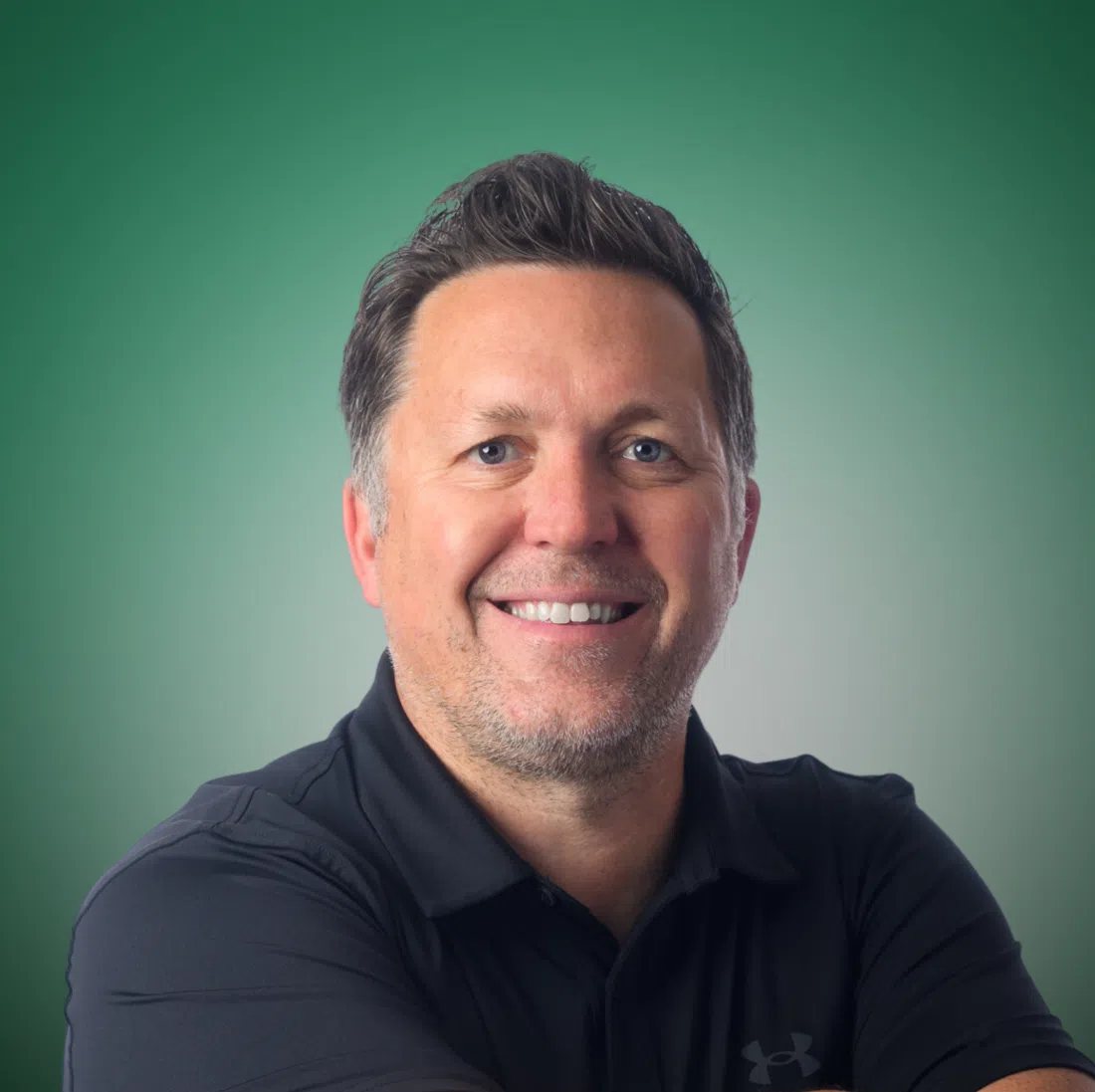


Sarah Mills: Hasn't life become so complicated?
There are apps, reviews, recommendations and endless opinions about how to do everything correctly. Sarah Mills says tha...
Wait lists stretch on, workloads pile up, and burnout is rising.
The shortage of speech language pathologists — or SLPs — has been a problem for over a decade, according to Speech Language and Audiology Canada, provincial advocacy manager, Jennifer Cameron-Turley.
Read more:
“People’s case loads are so large that people are burning out,” she said. “We’ve been working short for so long that you kind of give up hope that things are ever going to get better.”
Cameron-Turley said the shortages of SLPs impact every sector, from private to public, and in schools.
She pointed to school-based SLPs specifically, explaining they have excessive caseload sizes and substantial workloads.
“They used to provide support to students from Kindergarten through Grade Eight and some high school, but now our school-based SLPs have to prioritize students who need very intensive communication, support, and devices,” said Cameron-Turley.
“Then really they can only see students who are Kindergarten to Grade Two, and everything they do with the students is consultative, so they’re not able to actually do therapy anymore. So the therapy has now had to be downloaded onto people like EAS or teachers, which is not ideal.”
Last year, 407 SLPs were registered to practice in our province, a slight decline over the past few years.
However, there is a light at the end of the tunnel. A new master’s program at the University of Saskatchewan will teach students right here in Saskatchewan, rather than sending them out of province. The program will start in fall 2026.
“You can see slowly, things are going to get better. So the first class will graduate in 2028; it’s a two-year master’s program, so I think it will take a couple of years after that for things to really start seeing improvement, so we can fill those positions that have been chronically empty,” said Cameron-Turley.
“Then we can start to reach out into other areas and start treating and assessing populations that we just haven’t been able to.”
Packing up and moving several hours away is the only option Saskatchewan students have right now if they want to become speech pathologists.
980 CJME talked to three Saskatchewan students taking the Speech Language Pathology Master’s program at the University of Alberta campus in Camrose, Alta.
Michelle Balzer is from Regina and applied to three different schools, explaining it was a challenge.
“There was a good amount (of pre-requisite classes) I couldn’t take at the U of R, so that limited my options of where I could apply.”
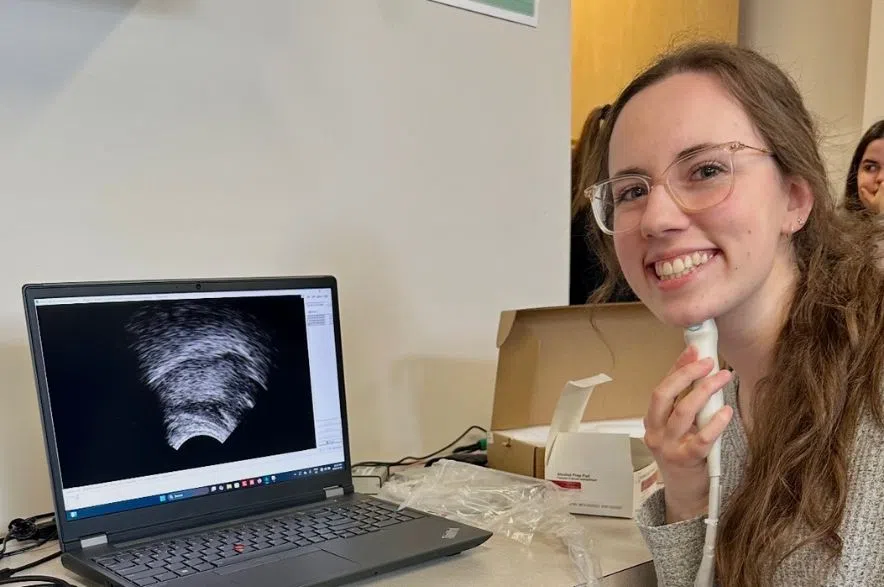
Michelle Balzer uses an ultrasound to look at tongue movement at the University of Alberta’s Augustana Campus in Camrose, Alta. (Michelle Balzer/Supplied)
Balzer said she has heard from other SLPs about the shortages.
“I did an internship at a private practice, and they’re just like, packed all the time, private in school too. Like school SLPs, they just can’t keep up. Even the job postings, there are always some posted.”
Matthew Halter is from Saskatoon, and said he would have loved to stay in his hometown to take his master’s program.
“Saskatchewan is home, basically Saskatoon in general too,” said Halter.
“I know that it probably wouldn’t be as bad for other people, but for me, I definitely would have preferred to stay in Saskatoon (to take my master’s).”
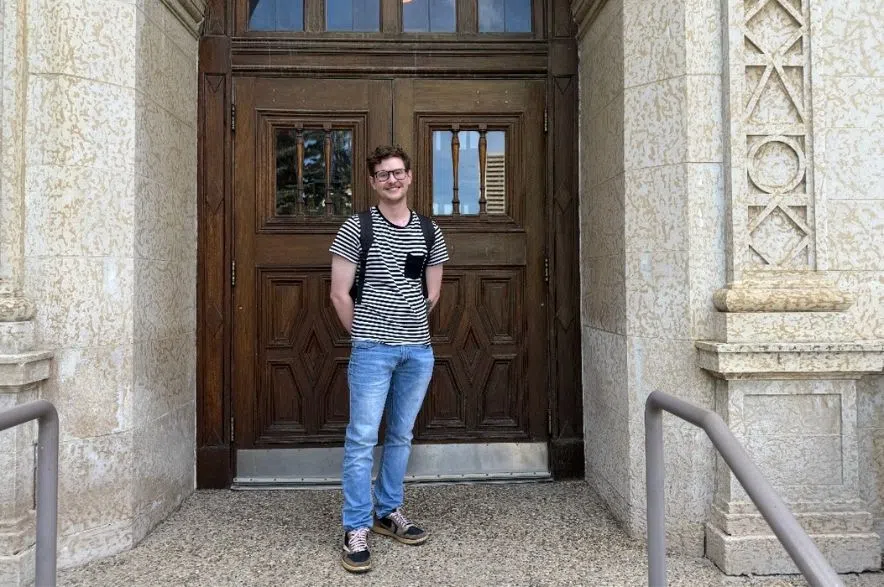
Matthew Halter stood outside the University of Alberta, ahead of starting his masters program. (Matthew Halter/Supplied)
Halter wants to come home to work once he graduates to help combat the shortage of SLPs.
“The first thing that I am told whenever I tell someone I’m going into SLP in Saskatchewan, every time I’ve said it, they said, ‘They really need those. And all you really want those. So that’s also been kind of pushing me to want to come back to Saskatchewan to help the field in the province as well.”
Nicole Dabao is from Regina and says it has been a learning curve picking up her life to move to a brand new city.
“It’s my first time living alone, and being quite far away from home has been a challenge, but I say the program has been really helpful. The friends I have made in the program really helped deal with the feeling of missing my family at home.”
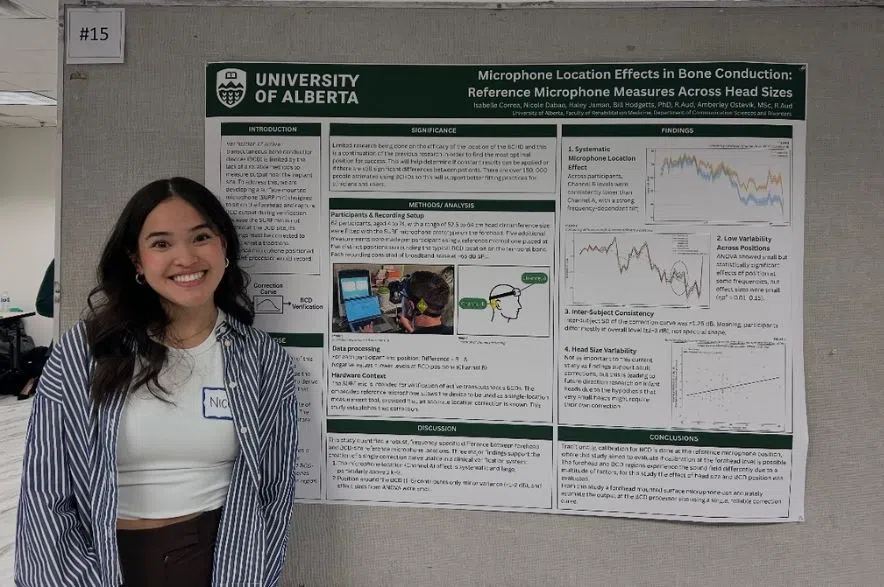
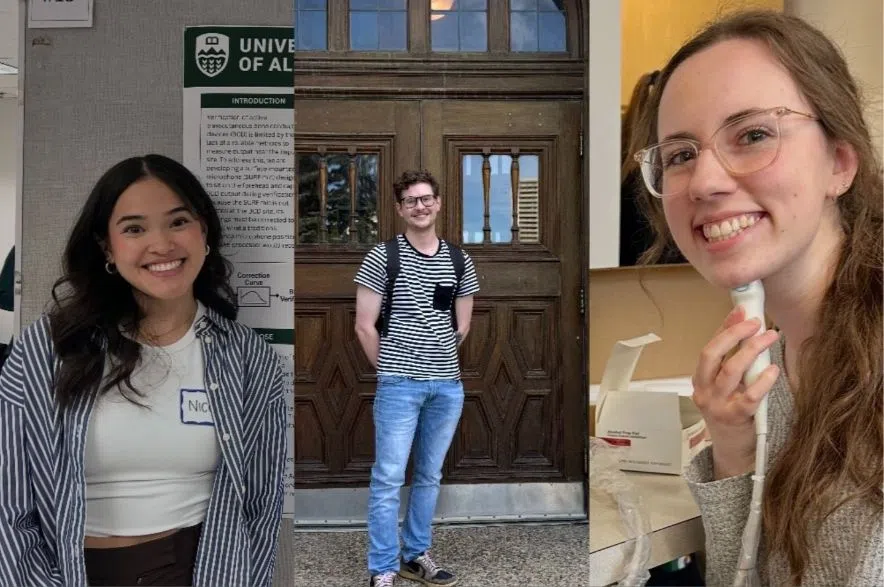
Nicole Dabao stands in front of a poster after presenting research they started at the beginning of the program at the University of Alberta in Edmonton. (Nicole Dabao/Supplied)
While these students are not required to return after completing their program, there are financial incentives from the Saskatchewan Government and the Saskatchewan Health Authority to entice students to return after completing their studies.
All three students are glad to see a Saskatchewan-based program starting up, even though it is too late for them.