Evan Bray: Diversifying trade doesn't mean abandoning U.S. relationship
Evan Bray says there's nothing wrong with Canada looking for new trade partnerships, but the idea of joining the Europea...
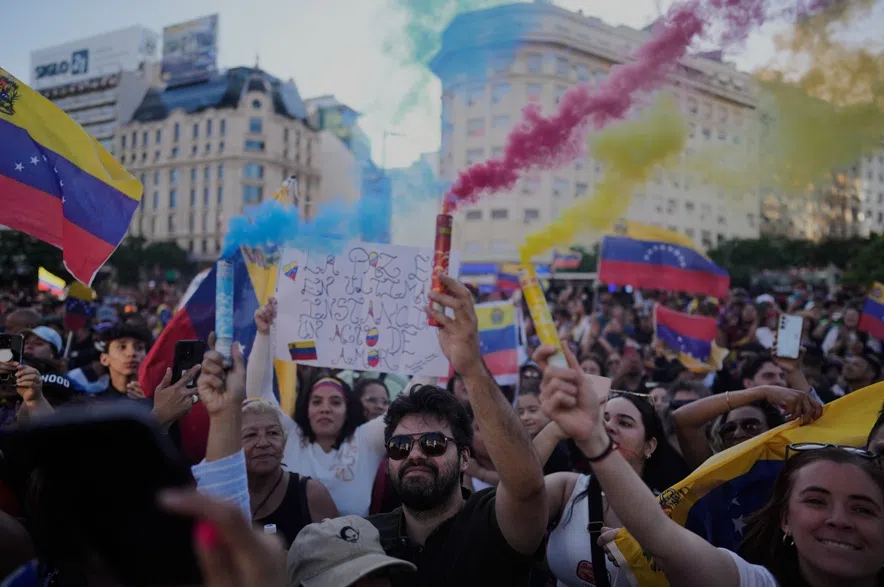
When Asnoldo Prieto woke up to messages from friends and family early on Saturday morning, the news didn’t feel real.
After years of watching Venezuela’s crisis unfold from thousands of kilometres away, Prieto was suddenly staring at images he never thought he would see: President Nicolás Maduro in U.S. custody, removed from power after an overnight military operation in Caracas.
Read more:
“It felt surreal,” Prieto said. “Even today it still feels surreal.”
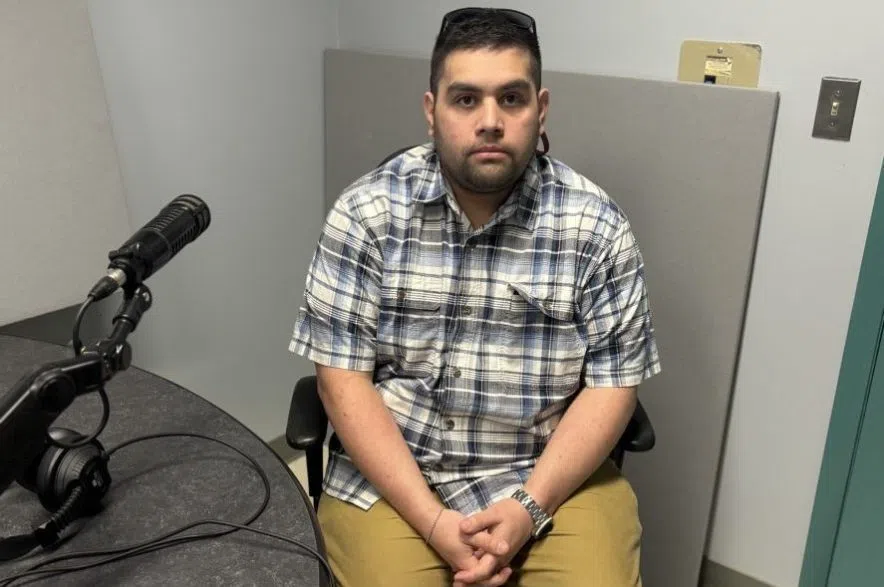
Asnoldo Prieto, a Venezuelan Canadian living in Regina, speaks during an interview about the arrest of Nicolás Maduro and the uncertainty Venezuela is facing as the country enters a potential transition. (Jacob Bamhour/980 CJME)
Prieto left Venezuela in 2011, arriving in Saskatchewan as a university student at a time when his home country was already sliding toward political and economic collapse. More than a decade later, he is still in Regina and still closely tied to Venezuela through family, friendships and memory.
For him, the arrest of Maduro is not just a geopolitical moment. It is deeply personal.
“I grew up on army bases,” Prieto said. “My dad was in the military, and my brother and I spent about 17 years living on those bases, including ones that were attacked.”
Seeing satellite images and reports from areas he once called home stirred conflicting emotions. Prieto described the destruction as “bleak,” especially knowing those were places tied to childhood memories.
“I could picture exactly where it was,” he said. “It was strange to see places you grew up around suddenly turned into targets.”
Prieto said Venezuela has felt like two different countries throughout his life.
Before Hugo Chávez came to power, he remembers a country that, while imperfect, felt optimistic and functional. That changed, he said, as Chávez consolidated power in a system later inherited and expanded by Maduro.
“You could see the erosion of democracy,” Prieto said. “Power became centralized, corruption became normal and the rule of law stopped meaning anything.”
He said the state gradually positioned itself as the sole provider, undermining faith in work, education and personal effort.
“What’s the point of working hard or studying if nothing changes?” he said. “That mentality eats away at the foundations of a society.”
Prieto said Maduro lacked Chávez’ political skill and allowed corruption to spiral unchecked, creating what he described as a culture of fear and impunity. That fear, he said, remains even now, after Maduro’s capture.
He said friends and contacts inside Venezuela have told him they feel cautious, even guarded, about how they talk about the moment.
“People are optimistic, but very shy about that optimism,” he said. “They don’t know who might be listening. They don’t know what’s safe to say.”
He said the shortage of visible celebrations inside Venezuela speaks volumes.
“You see people celebrating in Miami, Colombia, Chile, places with large Venezuelan populations,” he said. “But you don’t see it the same way inside Venezuela, and that tells you how deeply fear has been institutionalized.”
Prieto said many Venezuelans abroad are frustrated by criticism from people far removed from the situation, particularly those protesting foreign intervention without experiencing life under a dictatorship.
“It’s easy to protest when you don’t have skin in the game,” he said. “When your family isn’t at risk. When you can go home and nothing happens to you.”
He acknowledged the discomfort of hearing talk of foreign administration in Venezuela, saying it clashes with the country’s history and identity. Still, he said many Venezuelans see the moment as unavoidable.
“No one wants another country running their nation,” he said. “But after years of failed diplomacy, people are asking what other option was left.”
Despite the fear and uncertainty, Prieto said the moment has brought something he hasn’t felt in a long time: the possibility of a return.
He last visited Venezuela in 2016, but since then he said travel has since become increasingly complex, expensive and unsafe. The idea that he might one day go back, even briefly, carries an emotional weight.
“It does give me hope that I could finally return,” he said, “even though the Venezuela I remember no longer exists.”
Prieto said that hope extends beyond himself. He recently became an uncle, and said he wants future generations to understand where they come from.
“I want my family to see where we’re from,” he said. “To hear the sounds, eat the food, understand that this is part of who they are.”
But despite the growing optimism, Prieto is clear-eyed about the road ahead. He said he worries about political prisoners, internal power struggles and whether real change will follow the dramatic shift.
“There’s hope now,” he said, “but there’s also huge uncertainty.”
For now, he, like many Venezuelans, is watching carefully, waiting to see whether this moment becomes a turning point or just another chapter in a long, painful history.
“Venezuela has to change,” Prieto said. “It has to.”