Evan Bray: What would 'associate' EU membership mean for Canada?
There's been a lot of talk about Canada possibly becoming an "associate member" of the European Union. Evan Br...

On Sept. 8, 2024, a plane crashed on the Saskatchewan – Alberta boundary, which resulted in the death of two people.
The Air Transportation Safety Board (TSB) report said the flight was part of a multi-day pairing trip for a contract to photograph power lines. The Cessna departed from Kindersley and headed to the southeast area of Lloydminster.
Read more:
The plane had two crew members on board.
“The crew shared the duties of pilot and observer; whoever flew in the morning operate the cameras in the afternoon,” said the TSB in the report.
The report said the investigation obtained photos and videos from the onboard cameras, which showed the last series of photographs taken. The evidence revealed the aircraft flew over an intersection of power lines, then turned approximately 190 degrees to allow the observer to take additional photos.
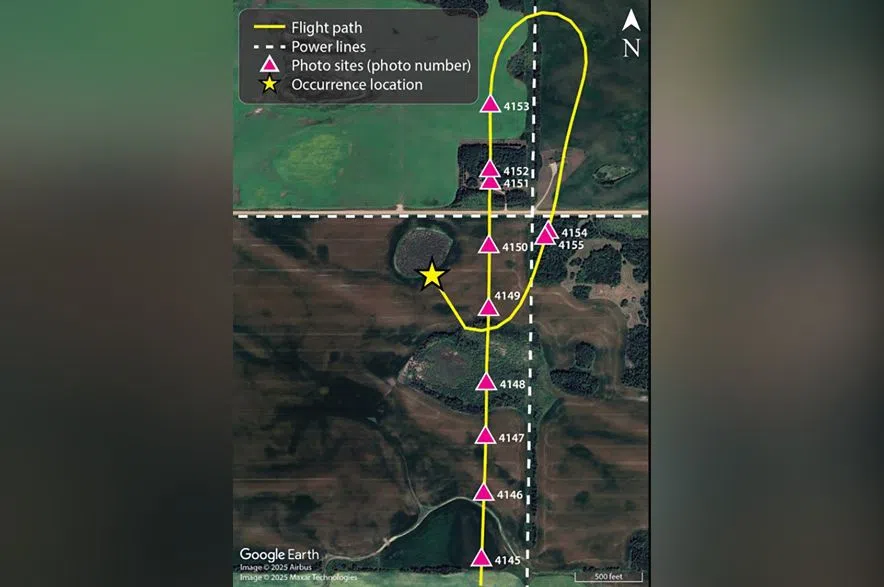
Flight path with photo sites and power lines (Google Earth with TSB annotations)
After the last photo was taken, the TSB said the pilot started a right turn roughly 200 to 300 feet above ground level. During the turn, the Cessna stalled and began to roll to the left as it descended.
According to the report, “three seconds after the stall began, the aircraft impacted terrain.”
“The pilot received fatal injuries, while the observer suffered serious injuries and died three days later.”
Both individuals held appropriate licenses and ratings to perform the task with plenty of experience on the particular aircraft.
“There was no indication that the crew’s performance had been affected by medical or physiological factors,” the TSB said.
“When required to conduct steep turns at low height, pilots need to be cautious given that there may be insufficient height to recover from an inadvertent stall,” said the board in the issued report.
KBM Forestry Consultants Inc., the company the crew was working for, has since expanded its low-level flight training program to include emphasis on stall recovery, drift illusions, and emergency procedures in low altitude environments.
Weather, according to the report, “was not considered a factor in this occurrence.”