Sarah Mills: Hasn't life become so complicated?
There are apps, reviews, recommendations and endless opinions about how to do everything correctly. Sarah Mills says tha...
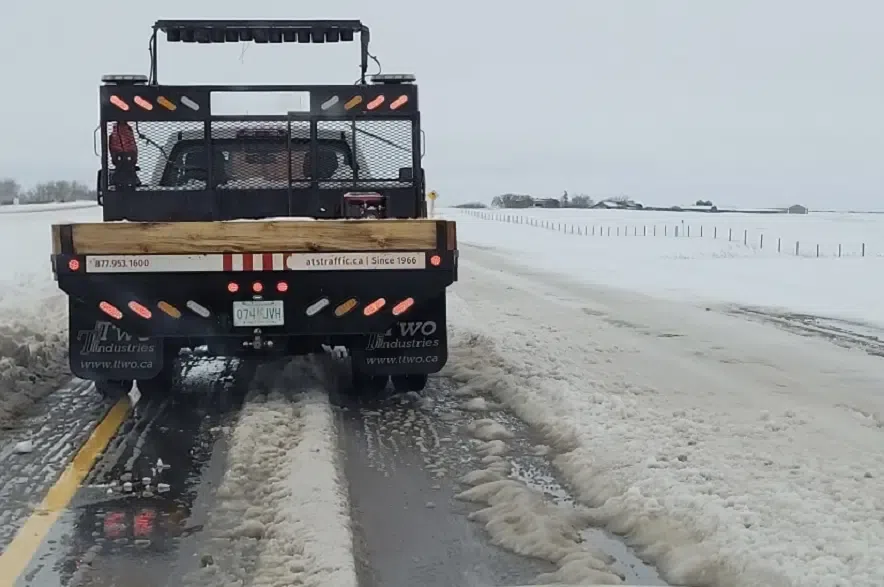
Many parts of Saskatchewan were well above their seasonal averages on Jan. 12, according to Brad Vrolijk, lead forecaster with Environment and Climate Change Canada.
Read more:
“I believe every single community in southern Saskatchewan saw daytime highs above freezing yesterday,” he said.
Based on preliminary data, Vrolijk said 12 record-high temperatures were recorded around the province.
Saskatoon reached 4.9 C on Monday, which was just 0.1 degrees shy of breaking a record set back in 1987. Regina was cooler in comparison, maxing out at 3.6 degrees and leaving its 1987 record of 7.6 C standing.
The warmest area on Monday was the southwest corner of Saskatchewan, according to Vrolijk. He said Maple Creek got up to 12 C and Cypress Hills Provincial Park hit 10.6 C, which set a new record. He said the previous record was 10.3 C, set back in 1996, “so that’s a 30-year record at this point they broke.”
But seeing higher temperatures than the rest of the province isn’t necessarily unusual for the southwest.
“They can often be five to 10 degrees warmer than anyone around them because of the impact of the hills,” Vrolijk said, explaniing that the hilly terrain helps mix the air, bringing warmer air down to ground level.
Perhaps the most “unusual part” of Monday’s weather “was actually parts of northern Saskatchewan,” the forecaster said.
While south-central and southeast Saskatchewan experienced daytime highs in the 3-5 C range, “as you went northwest it actually got warmer,” Vrolijk said.
He said Prince Albert reached 7.4 C, Meadow Lake hit 8.4 C, La Ronge reached 7.1 C, and Buffalo Narrows recorded a high of 7 C.
Here are the communities that saw the hottest Jan. 12 on record on Monday, according to Environment Canada’s preliminary data:
Don’t expect these temperatures to last though, even into Tuesday.
According to Vrolijk, there’s a cold front dipping south through Saskatchewan, meaning Tuesday will be a “bit cooler,” even though temperatures will likely still remain above seasonal norms.
While another surge of warmth is expected to come into the province on Wednesday and into Thursday, he said “more seasonal temperatures return back to the province” by the end of the week.
On the upside, Vrolijk said he doesn’t expect a major deep freeze to hit the province.
“There may be some brief cool-downs into the -20s, but it looks like it rebounds quite nicely,” he said.
According to Vrolijk, there’s no sign of a big temperature drop until later next week.
“Not too bad for January,” he said.
Meanwhile, Environment Canada Senior Climatologist David Phillips echoed Vrolijks’ comments on the Greg Morgan Morning Show, saying this “January thaw” is stretching longer than normal.
“It started on the weekend and, and I think it’s gonna be mostly this week. Typically, you can get a minute of temperatures above freezing, and it’s a January thaw, but, boy, this one has got some legs to it.”
While Phillips said cooler temperatures could roll in around Friday or Saturday, it will still likely be around seven or eight degrees warmer than normal.
“It’s not as if it’s like a slap in the face, where you get this warmth and then all of a sudden the polar vortex comes down to bite you. It kind of eases out with lots of sunshine,” he said.
“There’s not a lot of warmth on the sun at this time of year, but there’s a little bit.”
Despite this warm-up, Phillips said January is typically the coldest month of the year, with February being the second coldest.
“So we are not finished with winter, but with this little bit of a respite, you can unzip the parka and then feel a little bit better.”
Phillips said Jan. 13 marks a turning point in winter.
“It’s what we call the dead of winter,” said Phillips. “If you took all the temperatures year-round and graphed them for Saskatchewan, the bottom point would be Jan. 13th,” he said. “What that means is, there’s more winter behind us than ahead of us. I think this is the time to raise a glass and celebrate the fact that the days are getting longer, and you survived.”