Evan Bray: Diversifying trade doesn't mean abandoning U.S. relationship
Evan Bray says there's nothing wrong with Canada looking for new trade partnerships, but the idea of joining the Europea...
Producers may be breathing a sigh of relief with the news of a deal struck between Canada and China, announced Friday by Prime Minister Mark Carney, that will see China’s canola tariffs drop from 100 per cent to 15 per cent by March.
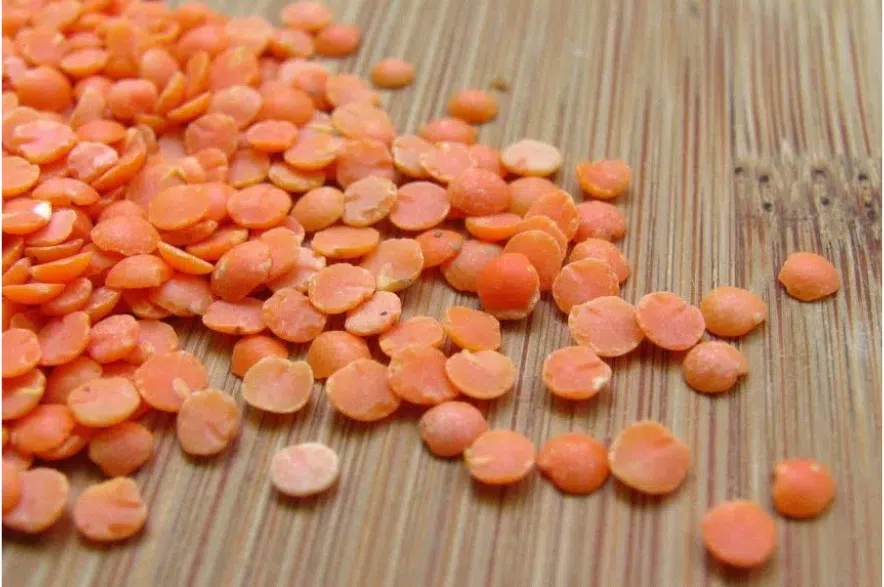
Peas are included in the Canada–China agreement, with the Asian nation agreeing to lift retaliatory tariffs on Canadian peas through at least the end of the year. That’s significant for prairie producers, as China has been one of the most important export markets for Canadian pulses.
Read more:
Murad Al-Katib, president, CEO and board member of AGT Food and Ingredients Inc., joined The Evan Bray Show on Friday to share his reaction to the newly announced deal.
The following transcript has been edited for length and clarity.
EVAN BRAY: This morning the big talker we’ve been talking about is the deal recently signed between the Canadian government and the Chinese government, and what this is going to do to the ag tariffs, to the Chinese EV tariffs, to the future of energy production in Canada and a whole lot more. And to kick us off on bugs and hugs, we have got the CEO, president and board member with AGT foods and ingredients, Murad Al-Khatib, joining us. Is it a bug or a hug for you? This deal that we’re hearing about that is just still drying on the paper.
MURAD AL-KATIB: Evan, it is a hug. At the end of the day, we have to be very realistic. We had no dialogue with China and no chance of resolution of what I consider to be absolutely punishing retaliatory tariffs. So where we sit today, Evan, it’s good news for the industry. Removing tariffs on peas, I think, is something that’s very positive for us. And on the canola side, reducing from the 100 per cent tariff down to 15 per cent, we’ll get canola trading again with China, and China is the largest market in the world for it.
Murad, is this getting us back to kind of where we were a couple of years ago? Is this back to normal? Is this opening the door for maybe something even better going forward? What’s your sense of where we’re at on the continuum of trade?
AL-KATIB: I don’t believe that when we get to the U.S. agreement renegotiation, we’re going to get to a zero-tariff kind of access into the U.S. market, like we had under the North American Free Trade Agreement. Tariffs are the new reality, Evan, and I think that from a trade perspective, what we need is consistency, reliability and predictability. And the best part of today’s deal, in my mind, is the tone of the conversation. The governments of Canada and China, they’re going to have ongoing conversations on trade, economic growth. This isn’t a one-time, transactional announcement. We are further ahead than where we were two years ago in that, with the two Michaels and the conflict, in particular, when Prime Minister Trudeau was in office, and the constant kind of prodding on human rights and all the different things, we were at a point where there was no dialogue. We weren’t important, and forget important; we were kind of country non grata. So today I think it’s a reset, and we can work towards solving the remaining tariffs. If more issues come up, we have a dialogue now, and there seems to be a true affinity between President Xi and Prime Minister Carney and, of course, our warrior Scott Moe was there on the sidelines, continuing to be a part of a resolution of this matter.
Can I ask, Murad, your thoughts on the stability that this may provide when it comes to investment in those value-add ventures. We talked about canola crush in one of the segments we had you on the show. Does this potentially open that up in Saskatchewan?
AL-KATIB: I think that the prime minister and the president did talk about increasing two-way investment into the broader agri-food sector, clean energy technology, wood products, other sectors. There is a view of more two-way trade and investment. There’s a target that’s been set by the government here to increase trade with China by 50 per cent by 2030. Evan, as I said on Monday, China is one of the three elephants in the jungle. It’s a massive market, and it’s one of the three legs of a four-legged stool of trade health for Canada. The U.S., China and India, are three legs for the rest of the world. Diversified trade is going to be the forced stability as we get less reliant on trade with the United States. This agreement paves the way for us to have access. Now when I look at the U.S. side, I don’t think this is obviously going to be well received by President Trump, but what I do like is there’s guardrails on it. It’s a very defined quota. It’s a six per cent tariff still, so it’s not a tariff-free access on electric vehicles. And I think that kind of modest quota that’s been established, we will end up in a position where we’ll get through with the U.S. as well.
I’m trying to look at this from every angle possible, because there’s a big part of me that that agrees with you. I don’t think Trump’s going to be happy. Is there an argument to be made that Donald Trump desires the deal so badly that he now sees Mark Carney as a guy capable of making a deal?
AL-KATIB: Well, I think, certainly, the psychology of Donald Trump is something that we could spend segments and segments talking about. But in the kind of competitive deal nature of a guy like him, I’ve dealt with people like that around the world. Evan, there’s certainly a view of respect for your adversary. I think there’s already an affinity between President Trump and Prime Minister Carney. I think this will give more credibility to to Mark Carney. He stared China in the eye. He did go and he got a deal. Ultimately, I think this is good politics for us, too, and I think we’re gonna go stare him in the eye, too. And I think we’re ultimately going to get a deal on the CUSMA renegotiation as well.