Sarah Mills: Ending door-to-door is the future for Canada Post
Rural Sask. has picked up mail from shared mailboxes for decades. Now, it will be the same in some parts of in Regina an...
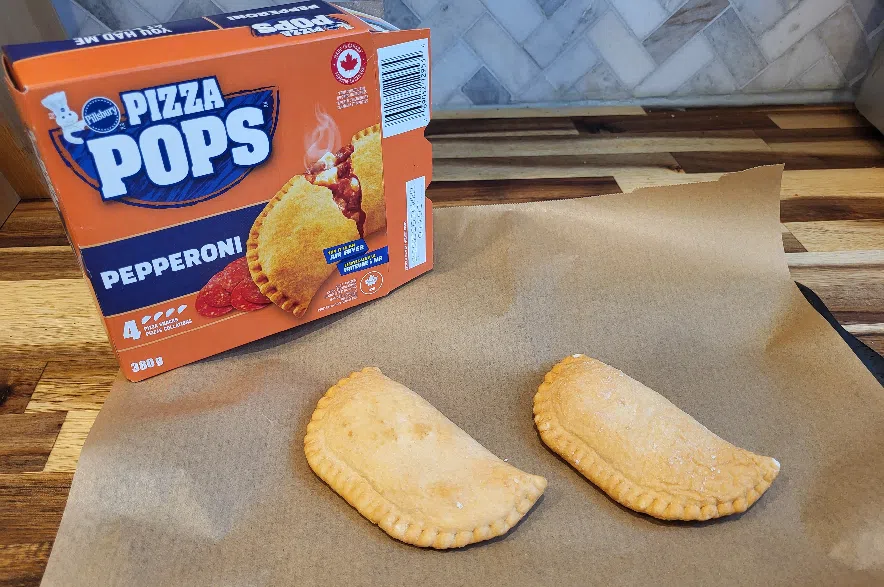
Bachelors and on-the-go families might be dismayed to hear about the ongoing recall of Pillsbury’s Pizza Pops products.
The recall, announced in December, was recently expanded to include three-cheese, pepperoni, pepperoni and bacon, deluxe and 3-meat varieties in various packaging due to possible E. coli O26 contamination, according to the Canadian Food Inspection Agency.
Read more:
A complete list of affected products is available on the agency’s website.
Dr. Joseph Blondeau, head of clinical microbiology at Royal University Hospital and the provincial lead for clinical microbiology with the Saskatchewan Health Authority, said it’s a serious concern any time a commercially available food product has the potential to make someone sick.
Blondeau said he is watching the cases evolve, adding that one of the main concerns is the availability of the contaminated products, which could increase the chances of the Pizza Pops being consumed by more people.

The initial recall, announced in December, was recently expanded to include three-cheese, pepperoni, pepperoni and bacon, deluxe and 3-meat varieties in various packaging. (Taylor MacPherson/650 CKOM)
Blondeau said it is realistic to expect more cases than the 29 already confirmed across Canada, six of which are in Saskatchewan. The microbiologist said we can only know the number of cases that are reported, and it’s unlikely that every case is known.
“It’s really, really important to report it, from a public health point of view, to try and understand that if we have something related to food insecurity – in this particular case, a contaminating bacteria – that the size of the problem is identified,” he said.
“I think having this information available in terms of reporting these cases is really important to making sure that our food supply is secure.”
He said the illness will usually resolve on its own if someone hasn’t been severely infected, but Blondeau said reporting helps health officials consider the magnitude of the problem, how it happened and learn how to prevent similar issues from happening in the future.
E. coli is a common bacteria, but the one associated with the Pizza Pops is a specific strain carrying the Shiga toxin, Blondeau explained. That toxin can cause severe, often bloody diarrhea and can lead to more serious health complications.
The toxin can bind to intestinal cells and cause damage leading to cramps and diarrhea. E. coli, Blondeau said, is carried by humans generally, though not this particular strain.
Headaches, nausea, vomiting and mild fevers can also be symptoms of the illness. Blondeau advised seeking medical attention if blood is noticed in diarrhea or if someone becomes severely sick.
“If you feel that you may have been infected after consuming this product, you probably should seek medical attention,” Blondau said.
He noted that this strain can be especially harmful to younger children or the elderly, which can lead to permanent damage.
Blondeau said the bacteria contaminating the Pizza Pops likely came from the manufacturing process, whether from an employee or something else that introduced it during processing.
It could be a combination of factors, and he said the freezer-to-microwave process leading up to consumption likely won’t kill the bacteria.
“I think that a lot of people have this misconception that because it’s cold here, for example, in Saskatchewan, bugs don’t survive,” Blondeau said. “But it’s just the opposite.”
Blondeau explained that freezing can preserve microorganisms. The microwave may kill some bacteria, but he said it depends on how long the food is cooked.
“The safe thing here is for people who buy these particular products to look and see whether or not you have one of the products that’s on the recall list, and if you do, either discard it or return it to where you purchase it,” Blondeau advised.
In spite of concerns over this and other food recalls – which he called unfortunate – Blondeau said it’s important to know and remember that Canada generally has great food security.
“Every now and then something happens where perhaps there’s a breakdown in a manufacturing step, or process where something gets introduced and not caught. Generally these companies have very good quality-control programs that allow such things to get caught,” he said.
He said microbiologists are always on the lookout for trends associated with potential outbreaks.