


Murray Wood: The Art of the CUSMA Deal
Insults, complaints that Canada is so mean, warnings the U.S. doesn't need us. It's all standard operating procedure. Th...
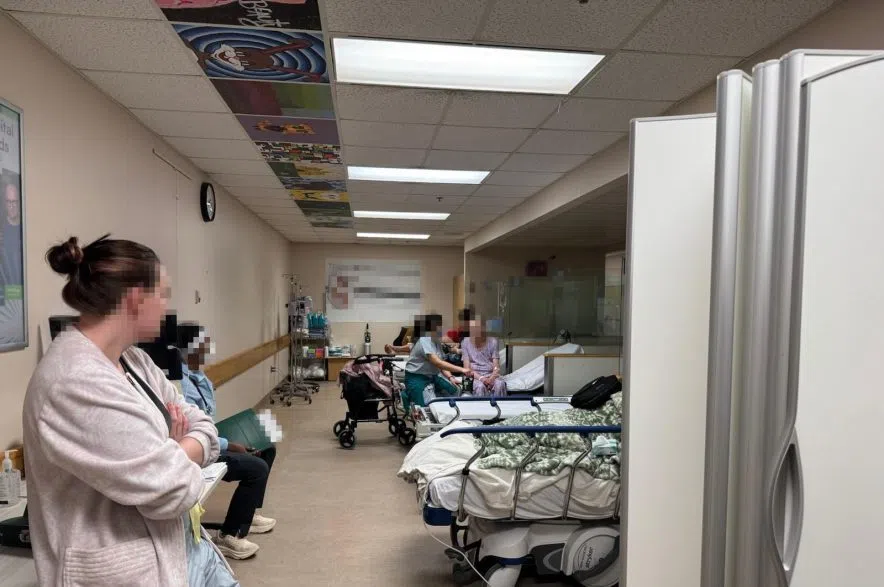
The official opposition is once again lambasting the provincial government over the province’s ongoing health care crisis.
This time, it was about a recent photo taken by a worker at Saskatoon’s St. Paul’s Hospital showing patients being treated in a registration room. NDP health critic Meara Conway said the photo represented a larger problem with the health care system.
“Physicians start here, they don’t stay here,” Conway told reporters on Wednesday. “We can’t retain our healthcare workers. We’re driving doctors out of the province.”
Read more:
Conway further criticized the provincial government for failing to adequately staff Regina’s Urgent Care Centre and the former Gardens Community Health Centre, which closed in November from a lack of doctors.
“This is a government that is actively skirting around the real solutions. It looks good to build a building, but all along they had no plan to staff that building,” Conway said. “We see them sort of going forward with this plan to build urgent care centers when everyone is raising the alarm about their inability to staff it.”
The opposition health critic said the provincial government needs to listen to the recommendations and concerns of frontline health care providers.
On Wednesday, the Saskatchewan Health Authority (SHA) said it was responding to an increase demand for emergency services at St. Paul’s. The health authority said it was using vacant space as a temporary patient care area adjacent to the emergency department.
“The space was equipped with appropriate emergency department stretchers, equipment, supplies and staff,” a written statement from the health authority read. “Temporary privacy panels were installed for patients to ensure their care was provided in private and did not impact outpatient services being offered nearby.
“This allowed for the delivery of safe patient care and continuity while managing pressures within the emergency department. Addictions beds were not used to assist with the temporary increased demand for emergency beds.”
In another emailed statement, Saskatchewan’s Ministry of Health said it was committed to ensuring that everyone had access to a primary health provider close to their home by the end of 2028.
This statement was sent after a survey from the Angus Reid Institute reported that 63 per cent of Saskatchewan respondents either didn’t have a family doctor or struggled to access them – the highest percentage in the country.
“Saskatchewan has one of the best physician compensation rates in the country, including special incentives for doctors in rural practice,” the Ministry of Health said. “The number of licensed physicians in Saskatchewan increased 80 per cent between 2007 and 2025 – an increase of 1,400 doctors. This is a 62 per cent increase in general practitioners and a 103 per cent increase in specialists.”
“The Ministry of Health is providing significant investment to expand and enhance programming targeted to recruiting and retaining physicians.”
The province also cited it’s “ambitious” Health Human Resources Action Plan, which includes expanded medical residency seats, a new mentorship and support program to help address long-term retention and increased Saskatchewan International Physician Practice Assessment (SIPPA) placements.
Through that program, the province said 338 additional doctors are currently providing service in Saskatchewan. Most are in rural or regional communities.
The ministry also said it is looking to strengthen or expand health care by adding eight extra undergraduate seats for medical students and increasing medical residency seats by 10 – including specialty training and family medicine expansion in the southeast – at the University of Saskatchewan; using the provincial government’s innovation fund to test new team-based care approaches, expanding frontline care; and expanding the use of nurse practitioners.