


Murray Wood: The Art of the CUSMA Deal
Insults, complaints that Canada is so mean, warnings the U.S. doesn't need us. It's all standard operating procedure. Th...
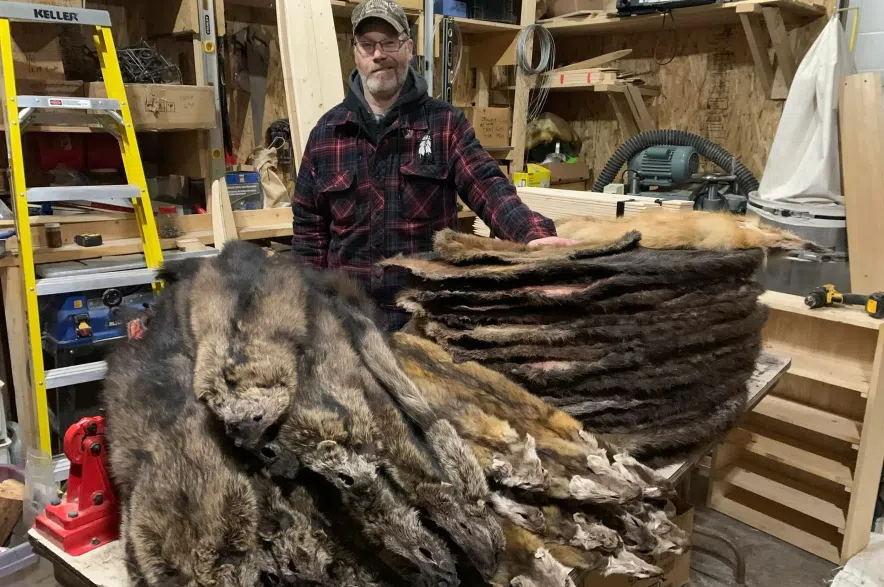
Saskatchewan’s fur trapping industry is at a crossroads according to northern harvesters and fur buyers — showing signs of modest recovery in prices while facing long-term challenges tied to development and fewer young people entering the trade.
That mix of tradition and transition was on display this weekend in Prince Albert, where the Indigenous Harvesters Association (IHA) hosted its annual general meeting on Friday and a public fur table sale on Saturday.
Read more:
Randy Morin, a long-time trapper originally from the Hudson Bay area and a member of the IHA, said the organization changed its name from the Northern Saskatchewan Trappers Association to better reflect the realities of life in the North.
“We just kind of switched the name over to kind of include all harvesters, not just the trappers. It’s the gatherers and the hunters and everybody else that’s involved in the North with a way of making a living,” Morin said.
The AGM was expected to focus on updating the association’s constitution, which Morin described as “a fresh new start on an old organization that needed to be updated.”
When it comes to fur prices, Morin said some species are seeing better returns than in recent years —particularly for pine martens. An average marten pelt is currently selling for about $100.
In Nipawin, Kerry Barks of K and J Northern Fur Stretchers said he’s seeing similar trends.
Barks, who has been trapping since childhood and now runs a home-based trapping supply business, said higher-value species can still make a difference for trappers who put in the time.
“If you do a marten properly, and I mean a jumbo marten, you’re going to probably get 180 or 200 bucks a piece,” Barks said.
“For a lynx, if you cut the legs off them, you’re probably looking at $150 lengths. If you do the feet properly, which is what we do here, and do the ear cartilage and everything else the way it is supposed to be done, I mean, that’s a $250 to a $300 length. So, a little bit more time in and the dollar turnaround is good. Even fishers are a decent price right now.”
Barks said he usually catches a few wolves each winter. Last year, he also caught a wolverine. He said the majority of his products find their way to the Korean market.
While prices for certain species have rebounded, both men said the industry is much smaller than it once was.
“The fur trade… I would say it isn’t as strong as it used to be,” Barks said.
“If you go back to when I was a kid, we would have had 10 buyers in Nipawin here back then. It’s not as big of a thing anymore as it used to be.”

When it comes to fur prices, Indigenous Harvesters Association member Randy Morin said some species are seeing better returns than in recent years —particularly for pine martens. An average marten pelt is currently selling for about $100. (Saskatchewan Trappers Association/Facebook)
Beyond economics, conservation plays a central role in modern trapping. Morin said forestry activity and industrial development can dramatically affect animal populations, forcing trappers to adapt.
“If there’s big blocks from the industry that’s been taken out by forestry, then there’s not going to be many animals there,” he said.
“So, there’s a bit of conservation involved in this too. We don’t over harvest in an area.”
Barks echoed that message, saying regulated trapping helps prevent animal populations from suffering due to overpopulation.
For example, if wolf populations are too dense, they are more likely to contract and spread mange.
“They lose all their hair, and then you seem them out in the bush standing there starving and basically freezing to death when it’s cold out. Coyotes are the same,” he said.
“If we don’t do our part to take care of animals before they overpopulate in the wild, Mother Nature is a cruel, cruel person on them.”

Kerry Barks, who teaches government trapping courses and works with youth in schools, said education is critical to the industry. (Kerry Barks/Submitted to paNOW)
Both said the biggest concern facing the industry is the loss of knowledge as fewer young people take up trapping — a skill traditionally passed down through families.
“It’s becoming a dying industry like any other industry within the hunting and trapping, gathering,” Morin said.
“A lot of this is passed on through generations, grandfathers teaching their kids and then their grandkids.”
Barks, who teaches government trapping courses and works with youth in schools, said education is critical. His teenage niece and nephew are actively involved in the industry and are often featured in the promotional videos on his business social media page.
“If we do not get the youth involved, trapping is going to be a dying trade. I mean, if you look at most trappers nowadays, there’s not a lot of young ones left. That’s why with my niece Mary, it’s very important that she does her part and she definitely loves being out there,” he said.
“It teaches you about nature, respecting it. It’s more than you can learn behind the computer.”
Read more: