


Evan Bray: Looking back on 9/11 a quarter century later
On the 25th anniversary of the 9/11 terrorist attacks in the United States, Evan Bray is remembering his own experience ...
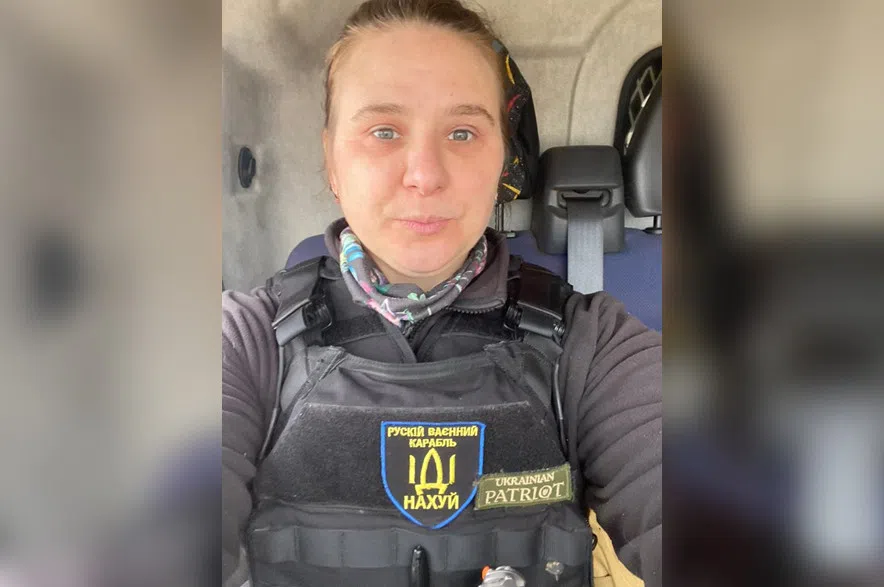
Saskatoon nurse Tanya Baran has visited Ukraine seven times since Russia invaded the country in 2022.
Baran serves as the medical lead for the nonprofit group Ukrainian Patriot, co-ordinating the delivery of first aid kits to front-line areas. She said people cannot truly understand war until they see it for themselves.
Read more:
“It is very real and a very uncomfortable feeling when you are sitting in your apartment miles away from the front lines and you can hear ballistic missiles landing or Shahed drones flying just outside your window,” she said.
Baran said she’s prepared for the nights when air raids hit by keeping an emergency bag full of medical supplies, clothes and documents ready by her door.
“You kind of find a spot in your apartment away from windows, and you just kind of watch and wait,” she said.
“This is life in Kyiv,” Baran added. “It’s miles away from the front lines, and families and people shouldn’t have to feel that way.”
Many stories have stuck with Baran over the years, but she said one in particular came from her time in Kramatorsk, a city in eastern Ukraine. Baran said she met a mother with three children who had been under Russian occupation once before in 2014, and lived in fear of the situation repeating itself.
“She told me how her family slept in a crawl shelter for months. The kids never went to school and they barely saw daylight and had minimal food,” Baran said. “They could only go out when it was deemed safe for them to get groceries, and relied on organizations to bring them aid.”
When the war began in 2022, Baran said the mother chose to move her children to a nearby city to keep them safe, but instead her children ended up living under Russian occupation for nine more months.
“I can’t imagine how many families that have had to make the decision to send kids off, or even the men and women who are defending Ukraine who’ve made the choice to separate from their families,” Baran said.
During Baran’s last trip to Ukraine, she said water, power and heat were limited to only a few hours a day due to Russia targeting infrastructure.
“It’s not even ideal times, because they’re trying to rotate through the entire city,” Baran said, noting that on some days she would get up at 3 a.m. to cook meals and do laundry before another blackout hit.
“I does give me a little bit of some guilt, knowing that when I talk to my teammates back in Ukraine, a lot of the times they’re sitting in the dark, they don’t have heat, or they haven’t showered in a couple of days because the water hasn’t been on,” Baran said.
“It’s really tough for them.”
Four years after the war began, Baran said it’s just as important to bring awareness to the issues Ukrainians face every day, and Canadians have the power to keep these conversations going.
“We are such a huge community here in Saskatoon, so working together is what can keep information out there to help support Ukraine.”
Angela Hill is a humanitarian and communications delegate with The Red Cross who has travelled to Ukraine countless times since the conflict began.
Hill just returned to Canada this month and said that Saskatchewan and Ukraine have a few things in common – specifically harsh winters.
“It’s been a really difficult winter. It’s been the kind of temperatures we see here in Saskatchewan, below 20 C. It has been windy, snowy, the sidewalks are icy,” she said on The Evan Bray Show Tuesday.
But on top of that cold and harsh winter, the people of Ukraine have had to deal with another factor – Russian attacks on their infrastructure.
“The power is often out. Heating for hundreds of thousands of people has been out. Water can be cut for hours or days at a time. So not only is it the complexity of awful cold weather and that being hard on infrastructure, but the conflict is actually really heightening it this year,” said Hill.
“Some of the people I’ve spoken with actually said this is one of the most difficult periods of the last four years because it’s the combination of the weather and the ongoing conflict.”
She said that despite the impact of the cold weather and Ukrainians constantly being under attack, they are a resilient people who have found ways to keep positive and keep a bit of normalcy in their everyday lives.
“People are still going out to restaurants when they can afford it. You get a blanket when you arrive and you tuck it around yourself. There might not be heat at the restaurant, but they’re still cooking and when there’s no water, food is brought out on paper plates,” she said.
“It’s taking care of one another, lending power banks, making sure each other has water, taking care of aging adults by making sure if there is power, maybe you have an electrical heater to plug in, or there’s extra blankets, or those lamps where you can charge them and have power when the power is out. All of these things are being done,” said Hill.
Danylo Puderak is the executive director of the Ukrainian Canadian Congress of Saskatchewan and said that when the war initially began, there was massive support from the Prairies.
“It wasn’t just the Ukrainian community. It was all of Saskatchewan that kicked into ‘how can I help’ mode. Our member organizations, our volunteers. We were overwhelmed with phone calls of offers of places for people to stay and for work,” he said to guest host David Kirton on The Evan Bray Show Tuesday.
But four years after the start of this conflict, Puderak said that it’s been difficult to garner that same kind of support.
“A lot has changed in these past four years, people’s news feeds don’t cover what’s going on in Ukraine like they did when Russia started their invasion. Even though Ukrainians are dying every day, Russia continues to bomb and to occupy nearly 20 per cent of the country,” he said.
Puderak said that throughout those four years, Ukrainians have fled to all corners of the globe, including Saskatchewan.
“When the invasion started, there were probably over six million Ukrainians who fled across the border. Ukrainians became displaced Ukrainians and many of them were in neighbouring countries. Poland and Germany took in huge numbers, as did Romania, Hungary, Slovakia, France, etc.”
“Canada responded by saying, ‘Okay, we want to help as well.’ So a special program called the Canada Ukraine authorization for emergency travel was set up, and it allowed Ukrainians to apply to get their criminal record checked, and then come to Canada with an open work or open study permit so they would be able to find refuge here,” he said.
Amidst that mass immigration, he said Saskatchewan really stepped up, taking in roughly 8,000 to 9,000 Ukrainians.
“Premier Moe and Minister (Jeremy) Harrison both said that, as many Ukrainians that want to come to this province are welcome to come here and find refuge, they also helped to fund five charter flights that brought displaced Ukrainians to our province,” he said.