


Sarah Mills: Ending door-to-door is the future for Canada Post
Rural Sask. has picked up mail from shared mailboxes for decades. Now, it will be the same in some parts of in Regina an...
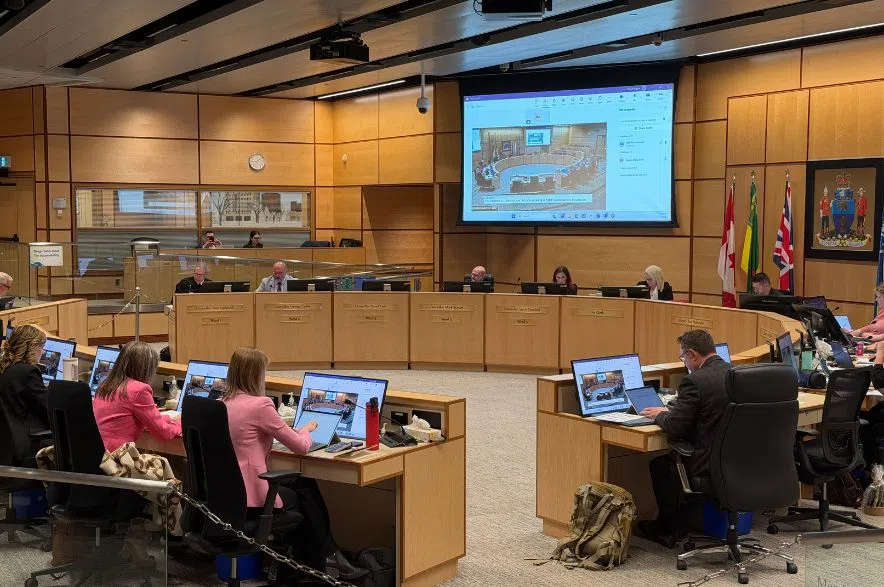
Regina City Council passed the city’s updated Official Community Plan during a lengthy meeting on Wednesday.
Despite Mayor Chad Bachynski’s observation that the plan was approved by the city’s executive committee following a five hour debate, discussion of the plan still dominated a meeting that ran until around 8:30 p.m.
Read more:
“This new growth plan is a financially responsible way to grow our city,” Bachynski told reporters after the updated plan passed, adding that the city expects a return on the money it invests into infrastructure.
“It actually addresses a number of different things for our city. It doesn’t just enable greenfield development. It helps with intensification efforts, as well as dealing with some of the serviceability issues and basement flooding,” the mayor added.
During the process, councillors were told by city administration that Regina’s wastewater system had no more capacity, so development of new communities must be linked to system expansions in what is meant to be a data-driven approach to growth.
A 2024 study found that Regina will need to add 57,000 new homes and 68,000 more jobs to accommodate a population of 370,000 by 2051.
While delegates at the meeting generally supported the plan, some developers called for greater flexibility.
“A rigid or overly literal application of the growth plan risks delaying development, discouraging investment and undermining council’s broader objectives for economic expansion and housing supply,” Darryl Lucke, of Harbour Landing West Developments, told councillors.
Additionally, the people behind the future Skywood development north of Diefenbaker Drive once again called for the project to be moved forward, saying it is the fair thing to do after the development was originally approved in 2015.
But according to Blair Forster, of Forster Harvard Developments, the plan does a good job of balancing various competing interests.
“No one got everything they wanted, but most got what they needed, and those who didn’t were given the reason why, supported by facts and data,” Forster said.
Vanessa Mathews, a University of Regina associate professor of geographic and environmental studies, argued the plan fails to align with previously established goals around intensification.
Bachynski said intensification, and the city’s downtown core in particular, remain high priorities.
“We heard today about how intensification, especially in the core area, helps our tax base. There is an incremental increase in revenue without having to expend more on snow clearing or otherwise, because all those roads and pipes and that are all there,” Bachynski said.
“It’s incredibly important that we still focus on that, and I think the programs and incentives that we have that we’re still working through and applying are going to help us get there.”
The report containing the plan passed, along with an amendment by Ward 5 Councillor Sarah Turnbull asking the administration to apply for any provincial or federal funding that aligns with the plan.
A bylaw vote to implement a 10 per cent transit fare hike was postponed to the March 11 council meeting.
Ward 8 Councillor Shanon Zachidniak asked that the item be removed from Wednesday’s agenda.
“I am asking for some additional time to seek additional options to address the concerns that have been raised with this bylaw,” she said.
City administration warned that it will need about a month to implement the increase, which was approved during budget deliberations. According to administration, the city will lose around $36,000 in revenue for every two weeks past April 1 that the implementation is delayed.
Bachynski said he worries that failing to pass the fare hike will mean the city will have to absorb a hit of around $500,000 from reserve funds.
“If there’s some other options to try and make up that deficit, I’m open to listening to that, but not at the detriment of reserves that we’ve already depleted,” he said.