Evan Bray: Looking back on 9/11 a quarter century later
On the 25th anniversary of the 9/11 terrorist attacks in the United States, Evan Bray is remembering his own experience ...
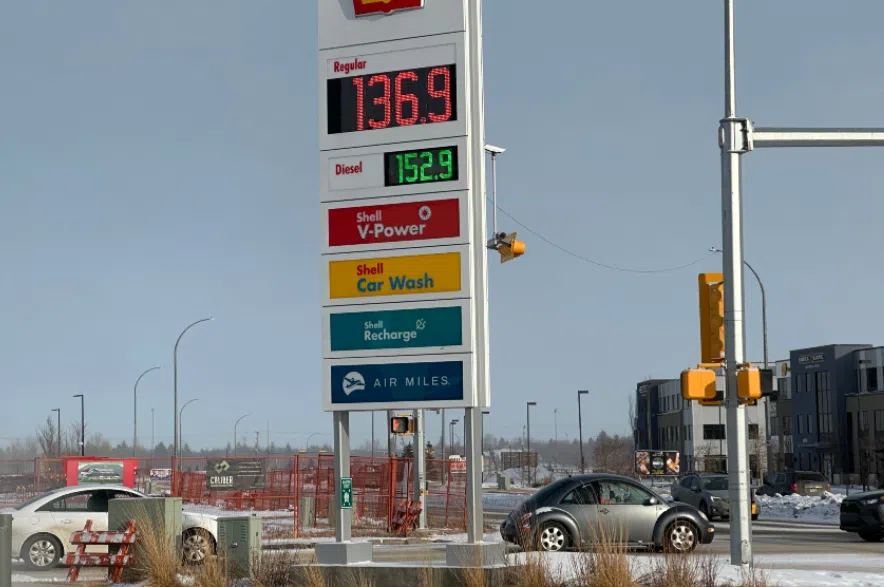
Gas prices in Saskatchewan could rise sharply within days as global oil markets react to joint U.S. and Israeli military strikes on Iran, according to a Canadian energy analyst.
Dan McTeague, president of Canadians for Affordable Energy, said disruptions to oil supply could quickly translate into higher pump prices.
Read more:
“About 20 per cent of the world’s market is disrupted, and that would mean, inevitably, a pretty big increase,” McTeague said Saturday.
“It wouldn’t be unforeseen to see prices move to $1.50 here in Regina and Saskatchewan in general over the next week.”
He said the immediate increase could be around 10 to 15 cents per litre, driven by uncertainty in global oil markets and fears of supply disruptions.
McTeague said the Strait of Hormuz, a critical shipping route for global oil, could see reduced traffic if ports and infrastructure are affected.
“If airports are shut down in some countries, it also means their ports are not going to be active,” he said. “Activity through these straits will be limited.”
He said markets typically react quickly to geopolitical instability, especially when it involves major oil-producing regions. Iran is one of the world’s largest oil producers, and any disruption can ripple across the globe.
“I think conservatively, $10 to $15 a barrel is probably what we’re looking at in the first day alone, until markets can figure out what’s happened,” McTeague said.
Even though Saskatchewan has its own refineries, McTeague said local fuel prices are still tied to global oil markets.
“We’re price takers. It’s a globally traded commodity,” he said. “If there is a risk to that supply, the potential is for prices to go up.”
He explained that refineries must pay global market prices for crude oil, meaning increases overseas are quickly reflected locally.
“You need oil to produce gasoline or diesel, and if oil goes up 10, 15, 20 per cent, then of course you’re going to see that reflected in pump prices within 24 to 48 hours,” he said.
McTeague also said Canada’s weaker dollar makes the situation worse for consumers because oil is priced in U.S. currency.
“All of our commodities are priced in U.S. terms,” he said. “A weak Canadian dollar is punishing consumers with a significant lack of purchasing power.”
He said drivers should prepare for higher costs but avoid panic buying.
“Don’t panic, but it would be good to fill up, because otherwise you may find that the next fill-up could be $10 or $15 a tank more expensive,” he said.
McTeague said the conflict could have longer-term consequences beyond fuel prices, depending on how global tensions evolve and whether oil supply remains disrupted.
“This is a highly volatile situation, for obvious reasons,” he said. “This is not going to be over in a couple of days.”
He said the full impact would likely become clearer once global markets opened and traders assessed the situation.
“We’ll get a better idea of what is happening once markets open,” he said. “But in the meantime, Canadians can expect a pretty significant increase that will be felt right across the board.
Read more: