
Sarah Mills: Where's the beef in the latest round of fast-food advertising?
Sarah Mills says a multi-millionaire CEO might want to stick to steak rather than classic burgers.

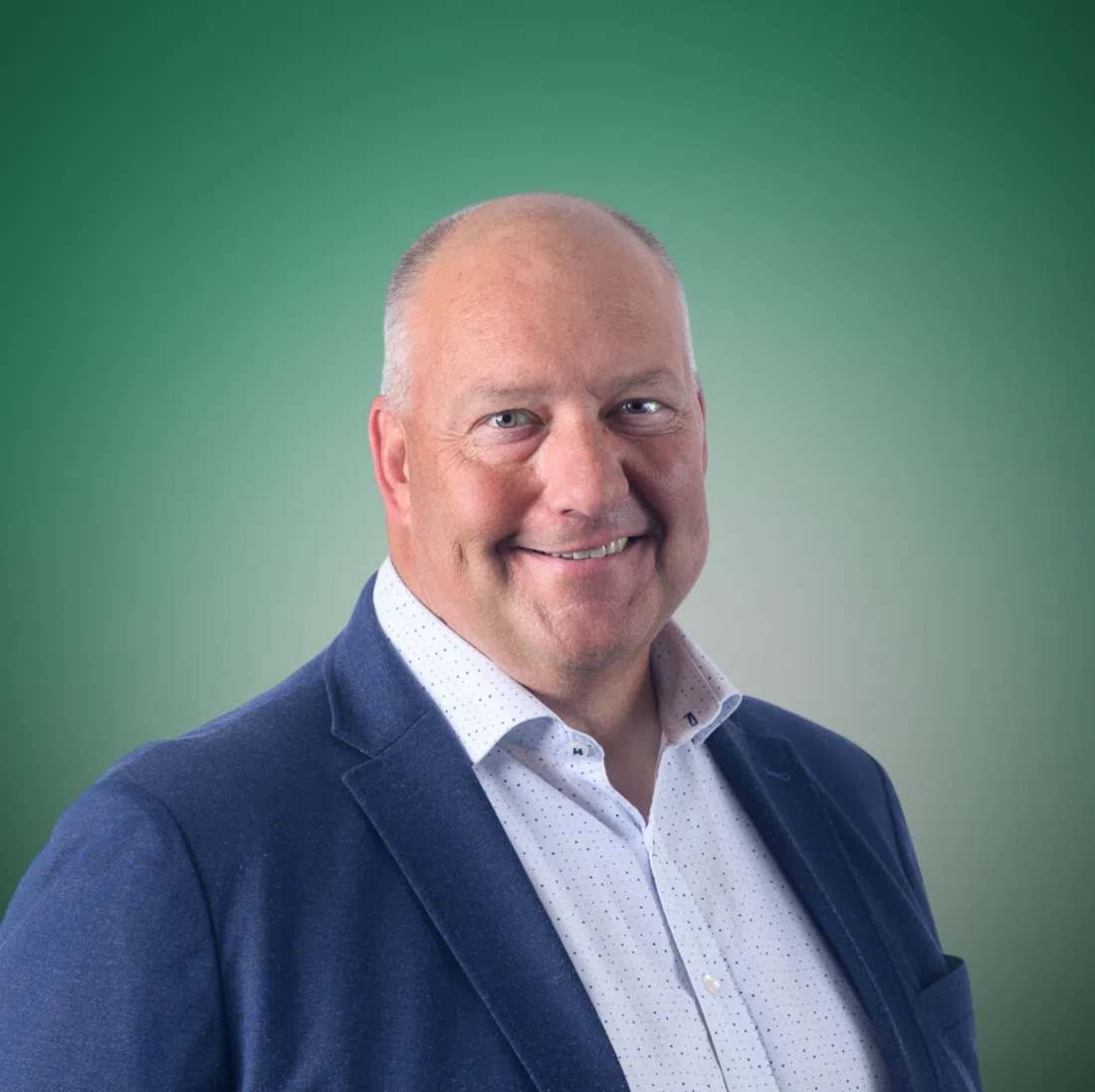
Dr. Vince Bruni-Bossio, the new leader of the University of Saskatchewan, was welcomed to Saskatchewan by Evan Bray on 650 CKOM and 980 CJME this week.
Born and raised in Jasper, Alta., Bruni-Bossio is the 12th president and vice-chancellor of the university. He assumed the rule on Jan. 1 for a five-year term and previously served as the interim provost and vice-president academic at the institution.
Read more:
He joined The Evan Bray Show on March 3, to discuss his future vision for the university, its history and influence on the world, his career and his legacy as a leader of the institution.
The following transcript has been edited for length and clarity.
EVAN BRAY: You’ve got, I’m guessing, Italian heritage?
DR. VINCE BRUNI-BOSSIO: Yeah, my parents came from Southern Italy.
BRAY: When did you come to the province and what is it about the province that has kept you here?
BRUNI-BOSSIO: I actually lived in some other cities before I came here. I lived in Calgary, Toronto, Ottawa, Montreal, and I was coming back west, coming through Saskatchewan, and I had an uncle who was here, and I stopped in — he was at the University of Saskatchewan — but I really became connected to the people of Saskatchewan, to the opportunities here, to the university here.
I really felt the connection with the community and just never left. I have enjoyed and am really grateful for everything that I’ve been able to do here at the university, and also within the province.
BRAY: You’re the 12th person to lead the institution. What does that feel like?
BRUNI-BOSSIO: It’s an important responsibility. I think that doing the amount of connection and work that I’ve done in the province has helped me to understand the importance of this province in the world, and the importance of this province in Canada, and the important work we do here.
I feel very excited to be able to lead in this time of change, because I feel this province has a lot to offer. We’re very closely connected with the province of Saskatchewan. It’s a great time to be a leader.
BRAY: I’ve seen you described as a skillful educator. You’re well decorated, many teaching awards, including the 3M National Teaching Fellowship in 2022. You’ve been a longtime faculty member of the Edwards School of Business since 2012. Can you tell us a bit about your career and how you think it’s helped you position yourself?
BRUNI-BOSSIO: When you look at my career, there’s three buckets and you’ve highlighted one of the buckets, which is teaching and research and my focus in the classroom specifically.
I’ve also done a lot of industry work across Saskatchewan — consulting and strategy and governance work — and I’ve also done a lot of work in the university in administrative roles.
When you put all of that together, it allows for a person who understands both what’s happening inside and outside the university and what’s happening on the ground level. I feel that my skillsets align well with what we need at this time in the university.
BRAY: Can you talk about what you see when you look on the horizon, even in the next five years? What do you see as some of the challenges that you and your team will face?
BRUNI-BOSSIO: I think every university in the world right now is facing similar challenges in that we’re being asked to demonstrate our value to society.
The second challenge is that these are really uncertain times. We used to be able to predict trends, but the trends are changing daily right now; everything is moving very fast, and depending on what’s happening politically, it impacts directly on us. This is a time of flux and change.
It’s a time of change within the university, too, where we need to rethink how we do things and make sure that what we’re doing is resonating with the people of Saskatchewan and the province and the whole world.
BRAY: Do you think that the way in which education is delivered has that provided more opportunity or challenge for your institution looking for the same pool of students?
BRUNI-BOSSIO: I would say the COVID-19 pandemic definitely increased our ability to be more flexible and I think that’s a good thing. We’re looking at different modes of delivery.
The challenge is understanding which mode fits where and when, and that’s something that we’re working on, but definitely the ability to do remote teaching, and to even combine that in a classroom with someone who’s face-to-face and do a hybrid version to demonstrate our value and not be so inflexible in how we do things.
BRAY: We had Dr. (Peter) Stoicheff on (the show) at the end of the year talking about the “Be What the World Needs” fundraising campaign which, we know there are leaders all around the world that have roots to the University of Saskatchewan.
Can you talk about the balance between the leaders all around the world, the “Be What the World Needs” campaign and local community engagement ?
BRUNI-BOSSIO: I really believe that we have done an incredible job of making ourselves understood as a world-class institution on the world stage.
We have gone around the world and really announced the University of Saskatchewan is here, but the ability to be a world-leading organization in the world will really depend on us coming back now and looking at our local context and asking what is it that Saskatchewan has to offer us, what are the things we’re doing really well here, and what are the things at our university that we’re offering in Saskatchewan that no one else has access to.
Connecting back with our local context, as I’m calling it — which includes industry, community, government — can help us go to that world stage and say “These are the things that we do better than anyone else.”
BRAY: What role will you play in continuing to build relationships with Indigenous communities?
BRUNI-BOSSIO: We have a strong commitment with Indigenous communities but we have a lot of work to do in terms of truth and reconciliation. We’re going to be focusing on deeper listening and relationship-building and what role we can play in helping them solve problems, partnering with them but letting them lead the agenda.
BRAY: What do you see as the strong contribution that you are going to be able to bring to the university?
BRUNI-BOSSIO: On a personal note, I really want to be known as the president who listened to people, connected with people, focusing on authentic relationship building and collaboration.
On a presidential note, what I really want to focus on is providing a clear understanding of the value the university is providing to this province and the world, making sure that we understand that and that we then can grow in those areas where we’re world-leading.