Murray Wood: Who's hot... and who's not
Every Friday, Murray Wood takes a look back at the week's news and decides who's hot... and who's not. This week's list ...
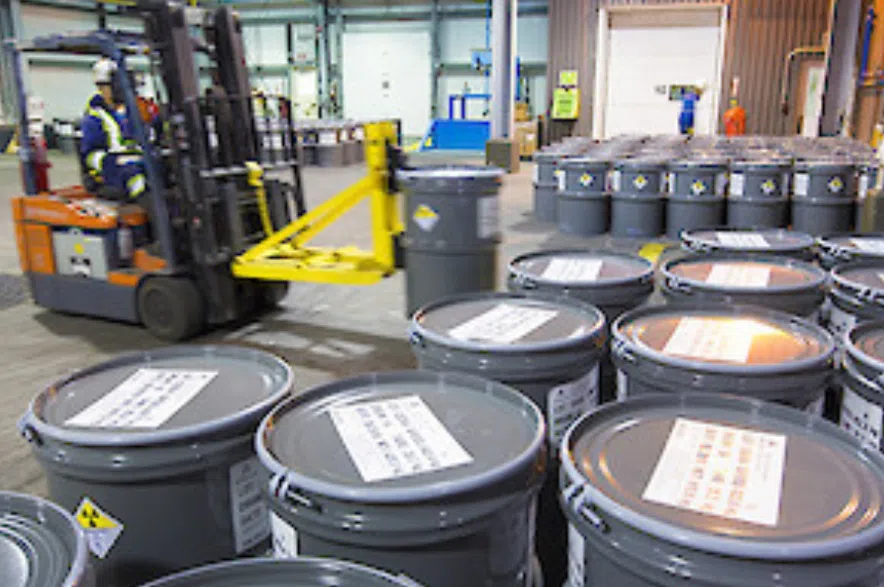
The Government of Saskatchewan is touting new jobs and economic opportunities in the northern part of the province, thanks to two new uranium mine projects.
The mines have received federal approval and are now advancing toward construction, according to a news release from the province.
Read more:
Denison Mines Corporation’s Wheeler River Project was approved for construction by the Canadian Nuclear Safety Commission on Feb. 19.
Earlier this month, on March 5, NexGen Energy Ltd. received approval from the same commission to build its Rook I Project.
“These are the first Canadian uranium mines to be approved for construction since 2004,” the release stated.
Chris Beaudry, Saskatchewan Energy and Resources Minister, expressed positivity over the projects.
“The Government of Saskatchewan is pleased to see Denison and NexGen reach this significant stage with their projects,” Beaudry stated in the release.
“Wheeler River and Rook I will provide generational economic opportunities for Saskatchewan people, particularly the Indigenous and Métis communities in the north, and strengthen our position in becoming the world leader in uranium production.”
David Cates, president and CEO of Denison, said more than a decade ago, the company “made a strategic decision to exit our international operations” in order to invest long-term in Saskatchewan’s northern uranium mining sector.
“Phoenix (Phoenix In-Situ Recovery uranium mine, part of the Wheeler River project) will be the first ISR uranium mine to be built in Canada and reflects the best of Canadian mining ingenuity and determination,” Cates said in the release.
“I am pleased to announce that site preparation and initial construction activities have already commenced at Phoenix, and that we are preparing to transition into full-scale construction. The support and encouragement of the Saskatchewan government have meaningfully contributed to the successful advancement of the project.”
Calling Rook I a “world-class project in a leading mining jurisdiction,” Leigh Curyer, founder and CEO of NexGen, said the mine will create opportunities in employment, local procurement and community infrastructure while generating an “initial estimated $32.5 billion in total economic impact for Saskatchewan over its construction and initial operations phases.
“This will mean generational careers and investments available for infrastructure in the North and across the province.”
The Wheeler River and Rook I uranium mines are located in Saskatchewan’s Athabasca Basin, which holds the world’s largest high grade uranium reserves, according to the province.
The province said more than 1,600 jobs will be created in the construction phase and more than 700 people will be employed when the mines begin operating. That represents a total estimated investment of $2.8 billion between the two projects.
“Demand for Saskatchewan’s responsibly produced uranium continues to increase as Canada and its allies around the world look for stable and reliable sources of low-emissions energy. With a strong regulatory framework, the world’s richest uranium reserves, and strong exploration incentive programs, Saskatchewan can meet this demand now and into the future,” the release said.
The uranium sector in Saskatchewan is presently responsible for more than 3,300 jobs, according to the Saskatchewan government. Residents from Saskatchewan’s north comprise about 43 per cent of mine site workers in the province.