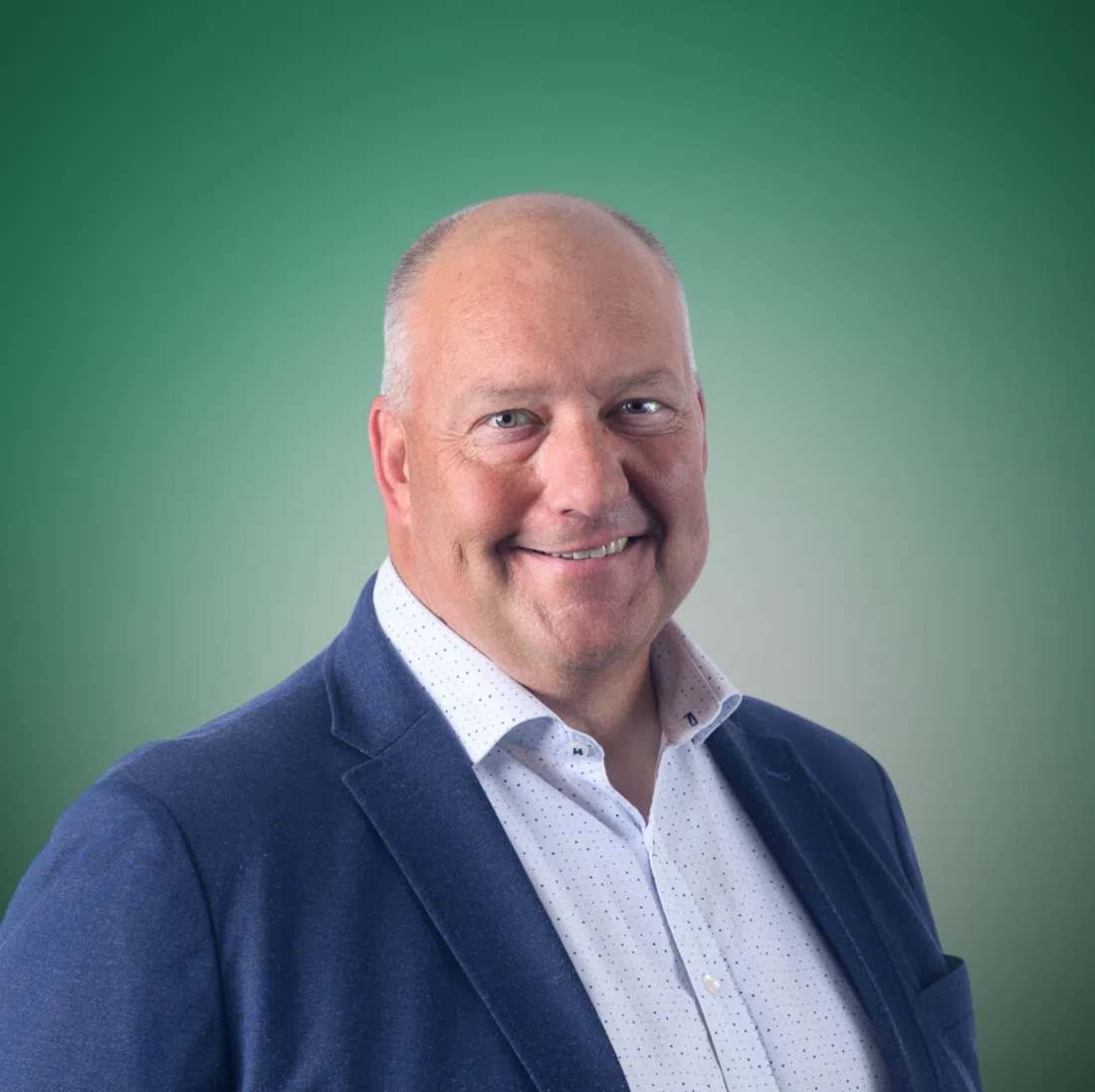


Evan Bray: Looking back on 9/11 a quarter century later
On the 25th anniversary of the 9/11 terrorist attacks in the United States, Evan Bray is remembering his own experience ...

AGHAGOWER — The people of County Mayo, found on the west coast of Ireland, greeted Prime Minister Mark Carney with open arms on Sunday.
Businesses hung Canadian flags outside their buildings, and groups of people held up signs on the side of the road as Carney made his way into town from the airport.
Some restaurants even invented names for their food in honour of his visit, like “Chili Con Carney” and “Mark’s Maple Sundae.”
“We’re so proud, that’s one of our own that’s come back to us,” said JP Scott of Scotts Bar and Grocery, which was offering the special sundaes. “It’s an honour to think the man in the top politicians in the world is here today in our small village.”
Carney is continuing his Irish pilgrimage, visiting his family’s ancestral village on the Emerald Isle. The small village of Aghagower is home to about 40 houses and a few hundred people.
Carney’s grandfather, Robert Carney, and grandmother, Nora Moran, were both from the town of Aghagower, in County Mayo, and immigrated to Canada in the early 1920s.
While in County Mayo, Carney met with Irish President Catherine Connolly.
He also took part in a tree planting ceremony, attended mass in a local church and visited the cemetery next door, where some of his ancestors are buried.
Dozens of people gathered at the church to welcome Carney.
“This is such an occasion, we’ve never seen anything like this in Aghagower,” said Kitty Foy, who lives across the street from the church.
Mary Rose Connell was with her 17-month-old son, Malachy Morgan — who was wearing a Montreal Canadiens jersey — and said seeing Carney was a great opportunity.
“We only live 40 minutes away so that he’s here in the west of Ireland, we had to come and see if we could see him and wave,” said Connell, who has an aunt in Montreal. “We’ve been reading the news articles about it and I know there’s a lot of excitement.”
Later in the day, the prime minister attended and delivered remarks at a civic reception hosted by Mayo County Council. Hundreds of people lined the street in front of the building to see Carney arrive.
In his speech, Carney spoke about his heritage and Canada’s ties to Ireland.
Carney also said that when he was governor of the Bank of England, he kept a small map of County Mayo in his office. He said he did so to remember where he came from.
“What was true of that map is also true of Canada itself,” he said. “The story of Canada does begin in places around the world.”
Before becoming prime minister, Carney renounced both his British and Irish citizenships. However, he still has several relatives in the area.
“I have a lot more cousins than I realized,” Carney said while speaking to reporters in Aghagower on Sunday.
Carney said he viewed the warm welcome he received as “a welcome for Canada.”
“I mean those are Canadian flags and it’s the ties of many Irish people to Canada,” he said. “It’s what Canada represents for many people around the world. A force for good, a place that welcomes immigrants, makes them their own and it’s reciprocated.”
“It made me proud as a Canadian to see that.”
Speaking alongside about a dozen of her relatives, Carney’s second cousin Rosaleen Heraty said she was “extremely proud” of him and grateful for his visit.
“We’re very, very proud of how the village has really stepped up to the mark,” she said.
Heraty said she found out she was related to Carney about six years ago when she saw him on TV and noticed his resemblance to her grandfather. She called her mother, who confirmed their relation.
“When he became prime minister last year, we were all just over the moon,” Heraty said.
Before leaving Dublin on Sunday morning, Carney received a plaque from the deputy commissioner of operations of the An Garda Siochana, the national police and security service of the Republic of Ireland.
Carney’s grandfather was one of the first men to join the Garda force when it was established in 1922.
During his time in Ireland, Carney is focusing on deepening Canada and Ireland’s long-standing cultural and people-to-people ties and expanding them across several sectors. In Dublin, he and Ireland’s head of government, Micheal Martin, agreed to work together on artificial intelligence, pharmaceuticals, biotechnology and food security.
Carney’s visit comes ahead of Ireland assuming the six-month rotating presidency of the European Union.
Bilateral merchandise trade between Canada and Ireland totalled $6 billion in 2025. Cereals led Canada’s merchandise exports to Ireland, while its imports were led by pharmaceutical products.
Ireland is also on the cusp of finally ratifying the Comprehensive Economic and Trade Agreement, or CETA, between Canada and the European Union. The deal provisionally entered into force in 2017 but has not yet been ratified by all EU member states.
A spokesperson for the Office of the Leader of the Official Opposition criticized Carney’s visit, saying “Canada already has trade with Ireland.”
“Making expensive trips to sign fake agreements and advance another country’s trade with other countries does not help the steel, aluminum, forestry and autoworkers who are losing their jobs in Canada right now,” said the spokesperson.
Carney said Sunday that Canada has a trade deal with Ireland but doesn’t have full ratification. He added that his government sees a “significant opportunity” with Ireland and the EU to deepen their commercial relationships.
“Ireland will be president of the European Union stating from Canada Day, it’s a crucial time,” he said.
This report by The Canadian Press was first published June 14, 2026.
—With files from Dylan Robertson in Ottawa
Catherine Morrison, The Canadian Press