


Murray Wood: Trump's potash claim is more 'art' than deal
The U.S. president says a deal is in the works to buy cheap potash from Belarus, but Murray Wood says Donald Trump proba...
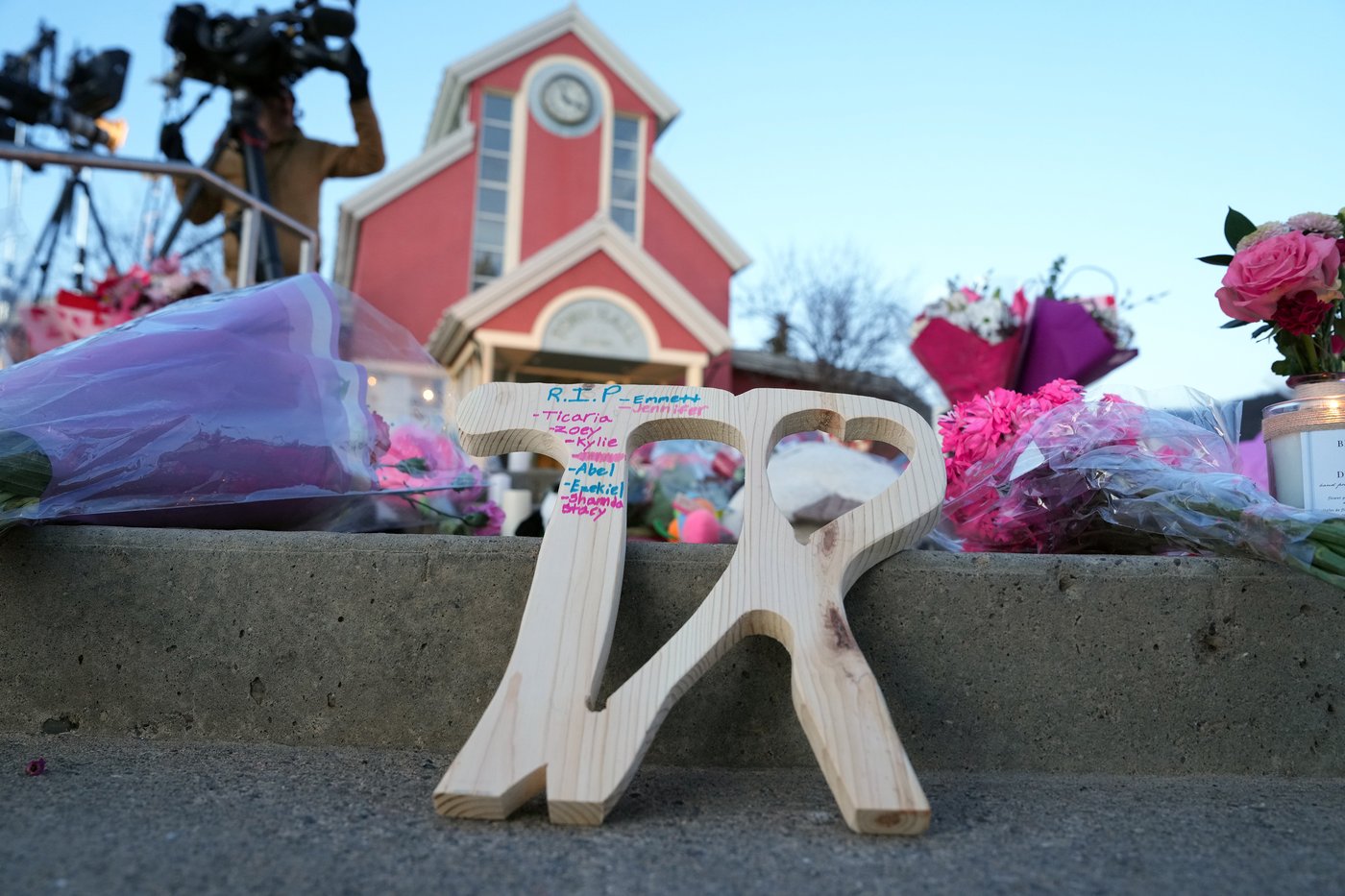
VANCOUVER — The B.C. government has filed a lawsuit against artificial intelligence company OpenAI in California over the mass shooting in Tumbler Ridge, B.C., asserting “one telephone call to the RCMP could have prevented the tragedy.”
Attorney General Niki Sharma announced the filing on Monday, saying the province is seeking accountability from OpenAI and its decision-makers.
British Columbia is also aiming to recover costs associated with the shootings in February that left eight victims dead, including five students at the local secondary school.
Sharma said OpenAI failed to warn police of concerning interactions between the shooter, 18-year-old Jesse Van Rootselaar, and the company’s chatbot ChatGPT.
“OpenAI has confirmed that the conversation between ChatGPT and the shooter was so alarming that it triggered an internal review by OpenAI employees,” she said. “This threat was not reported to the RCMP and was subsequently dismissed.”
Sharma said provincial officials have asked to view the interactions between Van Rootselaar and ChatGPT, but OpenAI has refused to disclose them.
“We should all be asking them why,” she said. “We know in similar cases, AI chatbots have been found to have counselled the person to conduct the crime.”
The Feb. 10 attack began with Van Rootselaar killing her mother and brother in their family home before moving to the school and killing five students between the ages of 12 and 13, along with an educational assistant. She then fatally shot herself.
The province’s lawsuit says “a warning from OpenAI would have reached an RCMP that already engaged with Van Rootselaar; had visited their residence in response to mental health concerns; and had removed firearms” from the home in the past.
Survivors and witnesses, including pupils and staff at Tumbler Ridge Secondary School, are separately suing OpenAI.
OpenAI founder and CEO Sam Altman has said he was “deeply sorry” the company did not alert authorities, adding the shooter’s account had been banned in 2025.
The lawsuit filed in U.S. district court in San Francisco lists Altman as an individual defendant, alongside the firm and other entities associated with it.
It says the company did not ban the shooter’s account, but deactivated it, a step it alleges failed to address the risk of harm as Van Rootselaar continued to engage with ChatGPT through a second account leading up to the killing spree.
Deactivation without a user-level ban, heightened monitoring or safeguards specific to the shooter “re-entrusted” ChatGPT to a user the company knew had already used its platform to “engage in conversations involving gun violence and whom their own safety team had identified as a real-world threat,” the lawsuit says.
Sharma said B.C.’s claim also alleges the company designed an “unsafe” product.
ChatGPT is “not a passive conduit for the speech of others but a content-generating product that manufactured scenarios involving gun violence,” the lawsuit says.
The claim asserts the company deliberately configured ChatGPT to maximize engagement in part by weakening or removing prior requirements that the system reject dangerous premises, and by instructing the chatbot to remain in conversations rather than end or sharply redirect those posing serious risk.
“Feasible, safer design alternatives existed and were not adopted or effectively implemented,” the lawsuit says.
The lawsuit seeks a jury trial, accusing the defendants of negligence, “aiding and abetting a mass shooting,” and liability for a defective product.
The B.C. government and the Tumbler Ridge school district, Peace River South, are seeking “compensation for the not just foreseeable but known harm OpenAI inflicted, the damages that they incurred and are incurring, and injunctive relief to ensure that this tragedy does not happen again,” the lawsuit says.
The claim does not provide an exact dollar figure, other than saying it would exceed $75,000. The plaintiffs are seeking “all damages recoverable under California law, including punitive damages, in amounts to be proven at trial,” along with interest and costs, the lawsuit says.
Sharma said the province is pursuing specific damages, including reimbursement of the costs to build a new secondary school in the small community in northeastern B.C. after it was determined through community consultation that the building where the mass shooting took place would be demolished.
The lawsuit says the plaintiffs’ extraordinary costs have also included the deployment of mental health clinicians to the small community. Between the day after the attack and early April, it says the province’s youth mental health teams alone delivered more than 900 counselling sessions to more than 100 different children and families, while Northern Health treated more than 130 adults.
“None of these expenditures would have been necessary but for the attack, and the attack would not have occurred but for OpenAI’s deployment of an exceedingly dangerous product, which facilitated the mental instability of the shooter.”
The Peace River South school district issued its own update Monday, saying a potential location for the new school had been identified, describing it as located in the community’s Middle Bench area, and a request for proposals for preliminary site work would be issued this week.
“At this stage, the work will focus on learning more about the site to see if it is suitable for a new school,” the statement said, noting there would be an opportunity for students, families and community members to share their input.
In June, Prime Minister Mark Carney announced the B.C. and federal governments were jointly providing $200 million to build the new school and modernize the Tumbler Ridge health centre.
Ottawa has also pledged more than $4 million to support those affected by the mass shooting, with up to $2.5 million going to the Red Cross and $500,000 earmarked for B.C.’s Ministry of Public Safety to help increase capacity for delivering victim services in the community and improve emergency preparedness.
B.C.’s lawsuit also seeks an order requiring OpenAI to implement safeguards that “reliably refuse, terminate or de-escalate” conversations in which users express intent to harm or seeks assistance with violence or weapons directed at others, along with several other measures aimed at ensuring public safety.
Sharma said the province filed its claim in California alleging that’s where OpenAI knew “serious things were happening in that chat” between Van Rootselaar and ChatGPT, but failed to report the situation to authorities.
Filing in California, where many technology companies are headquartered, also offers potential to effect change in addressing AI safety concerns, she said.
Sharma said laws and safety frameworks have not kept pace with AI technology and companies cannot be left to regulate themselves.
Sharma told a new conference in Vancouver that she had written to federal officials asking for changes to Canada’s Criminal Code to ensure AI companies can be held accountable for criminal conduct arising from their technologies.
“In any other circumstance, where a person aids, encourages, conspires to commit a criminal offence or is criminally negligent, they can be investigated, prosecuted and judged,” the attorney general said.
“There is no AI exemption to those criminal law principles.”
This report by The Canadian Press was first published Sept. 21, 2026.
Brenna Owen, The Canadian Press