Murray Wood: Who's hot... and who's not
Every Friday, Murray Wood takes a look back at the week's news and decides who's hot... and who's not. This week's list ...
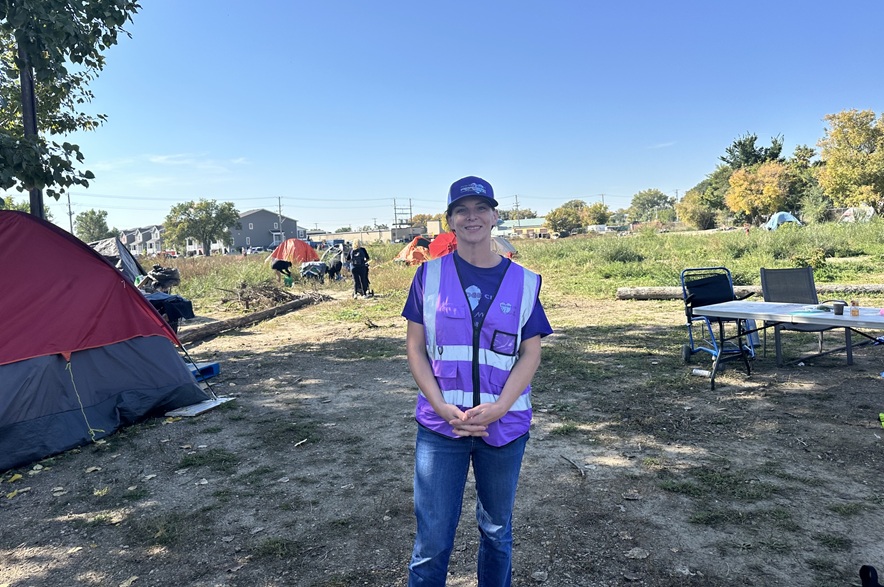
With plans to remove the encampment on Saskatoon’s Avenue K and 20th Street now on hold, the founder of Bridge City Warmth says there are also not enough housing options for those in need of a place to go.
On Thursday, the Saskatoon Fire Department, police and other crews arrived at the encampment site, which was planned to be cleared and have fencing put up.
Read more:
However, crews were met with protesters who linked arms around a truck carrying the fencing, calling for the work to stop.
On the other side of the encampment lot, the founder of Bridge City Warmth, Melissa Zimmer, said the organization will be there to support those living in the encampment if they are forced to move.
“We want to be peaceful, we want to be respectful (and) we just want to be helpful,” she said.
“We just want to help people where they are at the point in their life,” she said.
Bridge City Warmth is a volunteer group that supports people in need across Saskatoon by providing essentials such as blankets, clothing, footwear and hygiene products.
Zimmer said when she became aware of the encampment two weeks ago, the organization was told individuals living there had no blankets and were in need of essentials.
“That very day we loaded up with five volunteers (and) came with a truckload,” she said.
Zimmer said volunteers had seen tents in this area before, but the number has grown in recent weeks.
“When we set up our food here, we have long lineups,” she said. “We bring enough for 100 to 150, and we always run out.”
Zimmer said the organization was able to get four individuals into housing through its services, but explained there are limited housing options in the city.
“There’s zero housing for females right now, as far as the shelters go,” she said.
“There’s nowhere for them to go.”
Zimmer said there are various ways an individual can be left without housing, and “a lot of the time it’s not their fault.”
“It could be from trauma, residential schools,” she said. “They do want to be housed for the most part.”
Zimmer added that there can be barriers for those looking for housing, such as not having the proper I.D., or companies might not want to rent to the unhoused population.
Zimmer said Bridge City is continuing its work for the individuals staying at the encampment.
The organization may help by calling social services on behalf of an individual to see what kinds of places are available for them or what benefits they are entitled to.
She pointed to one couple the organization is helping move into housing and explained they had struggled to find a place after repeatedly being turned down and needed help navigating the process.
“When we’re out there advocating for them, they have a much better chance of finding supports and housing,” she said.
— With files from 650 CKOM’s Libby Gray