Murray Wood: It's getting better all the time
Even if it seems - as the rejoinder in the Beatles' song observed - 'it couldn't get much worse,' Murray Wood suggests w...
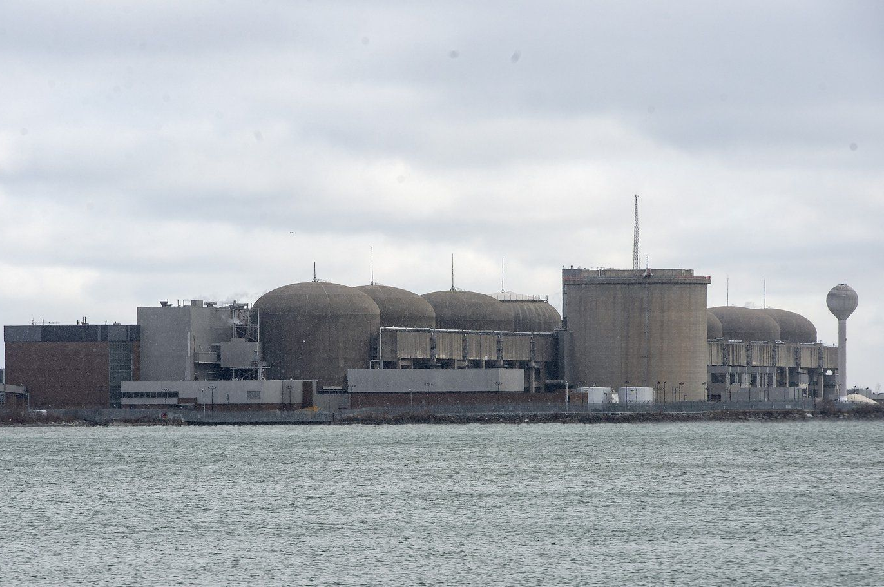
As Premier Scott Moe unveils a proposal to build two nuclear reactors in northwestern Saskatchewan, the non-profit think tank Clean Prosperity says the federal government could help pay for them in exchange for the province reinstating industrial carbon pricing. Saskatchewan director Jeff Davis joined The Evan Bray Show to discuss the proposal.
Read more:
The following transcript has been edited for length and clarity.
EVAN BRAY: Your report calls for a nuclear grand bargain. Break this down for us.
JEFF DAVIS: Nuclear reactors are very expensive. One small modular reactor will cost between, say, $5 billion and $8 billion, which is equivalent to about a quarter of Saskatchewan’s annual budget. So that’s a very expensive project, and it’s a lot of financial risk for Saskatchewan to take on a loan. So, what I’m suggesting is that Saskatchewan strike a deal with the federal government, whereby they come in and help with the funding for the start of the nuclear power sector, and in exchange, Saskatchewan restarts industrial carbon pricing. Industrial carbon pricing is something that the federal government is interested in and they want to see that restarted for Saskatchewan. They’re also within their rights to force Saskatchewan to restart that carbon pricing if they choose to. But we think that the time is now for Saskatchewan to strike a high-stakes deal whereby the federal government can come in and help us make that transition to nuclear power.
It feels to me like the federal government is in the business of making deals with provinces. We’ve seen it in Alberta. We’ve seen it a couple of different ways in B.C. So, maybe gone are the days where it’s kind of one blanket deal for the country, and more these kind of handshake deals as the prime minister goes across Canada. This is an opportunity, is what you’re saying, for Saskatchewan.
DAVIS: Yeah, absolutely, even so, like you’re saying, with the Alberta MOU, I think the federal government really signaled how they’re open to making deals, and I think they’re open to making creative deals that really cut to the heart of what that province is struggling with. And for Alberta, the big issue is getting a pipeline. But for Saskatchewan, maybe nuclear is a pipeline.
Carbon has been a topic that many people have jostled about in many different ways, and we know that our provincial government has taken a fairly strong stance on that. So, what would this mean in practical terms? Let’s say they can get a deal. This gives Ottawa the ability to support, financially, a reactor in Saskatchewan. What would this carbon price look like in your report’s eyes?
DAVIS: For one, it’s not the consumer carbon price that was in play previously. What we’re really talking about is the industrial carbon price or the output-based pricing system, which governs industrial facilities. So, really, how would this affect the average consumer? Would it be appearing on SaskPower bills? So, that’s why our report suggests that if and when Saskatchewan restarts the OBPS, they make sure to implement a direct-to-ratepayer rebate system to either partly or fully negate the effect on consumers. You know that carbon pricing showing up on SaskPower bills was very unpopular, and we’re not suggesting a return to that. We think there’s a way to do it that has less of an impact on average consumers and more of an impact on industrial customers, in effect.
BRAY: Has there been any modelling of what the cost would be per Saskatchewanian if we went it alone and we were going to make this transition to nuclear? How foreseeable is that from a cost-of-living perspective?
DAVIS: I think there’s really quite a bit of risk there. Saskatchewan is one of the smallest jurisdictions to ever try to build a nuclear reactor. In fact, it’s the second smallest ever after New Brunswick. Saskatchewan has only 550,000 ratepayers. So if a project like that went over budget, or if it took longer than expected, which could certainly happen, there’s nothing really keeping that from just affecting the power price from going up. So we think it’s very important to build in some more protections for the public purse and for the average electricity customer in Saskatchewan.
BRAY: Nuclear projects have a bit of a reputation for running over budget, behind schedule. I can’t help but think, does that get complicated by an agreement with the federal government, or does that help maybe keep us on time?
DAVIS: I think it honestly could probably help us keep on time. One thing that our report found was that a strong oversight mechanism can help to keep the projects on course. So we looked at a lot of international examples of reactor builds, and we found certain jurisdictions that had strong oversight bodies, kind of separate from the government itself, and helped to keep the project on track. So, yeah, those are kind of protective systems that you can build in. I think a partnership with the federal government could perhaps help to implement that in a rigorous way.