

Sarah Mills: Canada should be united in grief
Sarah Mills says the tragic set of circumstances in Wainwright that left four dead and dozens injured should make us all...
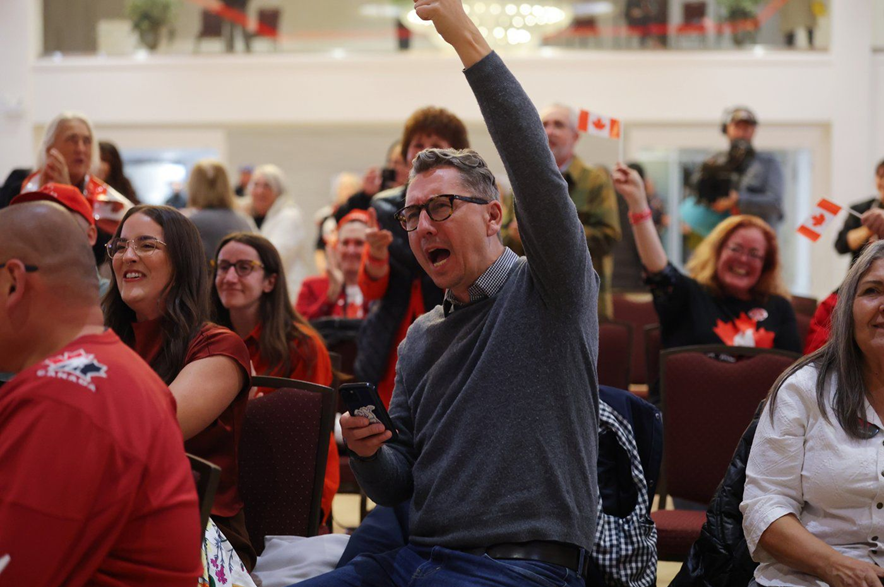
Journalists covering Monday’s referendum on Alberta separation and constitutional issues say the result on the big question turned out largely as pollsters had predicted.
But deciphering voters’ true intentions is a little trickier.
“We know there was a significant proportion of option two people that just wanted to send Ottawa a message,” Global News Ottawa bureau chief David Akin said on the Evan Bray Show.
Read more:
“Pollsters polled on this last week. They said, ‘Are you really voting for separation, or do you want to just send Ottawa a message?’ And something like 60 per cent of the people who said, ‘I’m voting option two not because I don’t want Alberta to be in Canada, but we’ve got to give them a message. We’ve got to shake things up, that the relationship between Alberta and Ottawa has to change.’
“So that is the message. I hope Prime Minister Carney… accounts for that one in four voters (for whom) status quo isn’t good enough.”
Ryan Jespersen, host of the Real Talk podcast, echoed the point that not everyone who voted for a separation referendum actually wants Alberta to withdraw from Canada. But he also suggested the reverse could be true: not everyone who voted to remain is entirely satisfied with how things are. The results of the other nine questions, he said, will reflect those views.
“I think that will give Premier Danielle Smith a mandate, and maybe I wouldn’t say marching orders, but it’ll certainly demonstrate where Albertans feel like they’d like to see the most work done,” Jespersen told the Evan Bray Show.
Akin said politicians campaigning for the “remain” side, including federal Conservative leader Pierre Poilievre and former prime minister Stephen Harper, made the same point: Albertans could stick with Canada while continuing to promote change.
“We’ve had that tension since Pierre Trudeau in 1968; Alberta’s been butting heads with Ottawa, and I expect Alberta will continue to butt heads with Ottawa, but within Canada. And that was the key for even the remainers who want change,” he said.
Eileen Bell of 880 CHED in Edmonton noted the heavy turnout in Indigenous communities, which she believes was one factor in the strong vote to remain in Canada.
“Back when the separatist question arose, Indigenous groups were the ones that brought it to court and fought it,” she told the CKOM Morning Show with guest host Gerald Bauman. “They feel very, very strongly that their treaty rights are threatened if Alberta separates. So they mobilized like nobody’s business.”
Akin pointed to two electoral ridings where a slim majority voted to hold a separation referendum: Rimbey-Rocky Mountain House-Sundre, in central Alberta, and the northern riding of Central Peace-Notley. That seat is held by finance minister Jason Nixon.
“So, his constituents — they don’t want him to be finance minister of a province in Canada. They want him to be the finance minister of the Republic of Alberta. How do you deal with that if you’re a UCP (United Conservative Party) MLA?”
Jespersen said he would be watching for an attempt by separatists to take over Premier Danielle Smith’s United Conservative Party.
“Maybe the separatists take over the United Conservative Party, but for them to believe, for them to assume that they can take over the party and easily form government, I think, if I can be candid, is delusional because Albertans have just spoken loud and clear about how they feel about separation.”
Jespersen said that he believes the referendum demonstrated a healthy democracy, but he also worries about its divisiveness.
“I think that there has been some damage done,” he said. “I think, probably, in relationships and maybe the bigger picture to Alberta’s reputation.
“But I am optimistic that those wounds and that damage can be healed, and I want to be one of those that’s leading the charge on that.”
Saskatchewan Premier Scott Moe said Alberta’s vote to stay in Canada sends a “strong message.”
“From Saskatchewan’s perspective, we very much will continue to work with Premier (Danielle) Smith,” Moe said, noting Saskatchewan remains committed to working with Alberta to strengthen both provinces.
“That’s always been our goal, but it certainly is a goal that we’re focused on here today,” he said.
Still, he said nearly 25 per cent of Alberta’s population that no longer wants to remain a nation of Canada.
“I think there’s also a recognition that we need to continue doing some of the significant and, at times, challenging work that has been raised,” he said.
— With files from 650 CKOM’s Libby Gray