

Sarah Mills: There is still some skepticism about ice skating judging
Canada's ice dancing bronze medal should be celebrated, but Sarah Mills says the stink of Salt Lake City and the judge v...
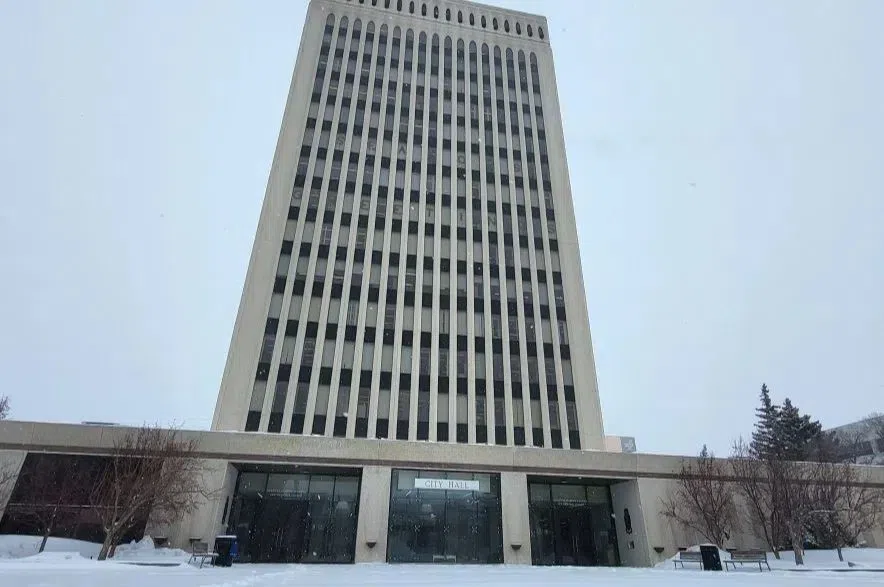
Regina’s mayor says proposed changes to the city’s Official Community Plan will give it a “more tactical, data-driven approach.”
Recommended changes are on the agenda for the city’s first Executive Committee meeting of 2026. It will be an opportunity to address growth in the city that has outpaced what was projected when the plan was first completed in 2013.
Read more:
“Our previous growth plan, and the way that we looked at it was, I would say, we weren’t being as effective with the way we were installing infrastructure and leveraging that,” Mayor Chad Bachnynski said Monday.
“We’re looking at a way of growing that’s actually going to leverage that infrastructure and stretch the value of that infrastructure much further by making sure that we build around it more fulsome, I would say.
“I’m actually quite excited, from what I’ve seen so far, and looking forward to the discussion.”
The 2013 plan sets out a plan for phasing new neighbourhoods, requiring a phase to be 75 per cent complete before the next phase is approved.
The proposed change would create tiers for new neighbourhoods based first on existing wastewater capacity, then areas that will have that capacity once the northwest lift station is completed, followed by new trunk lines and areas that need larger-scale infrastructure upgrades.
Under this approach, neighbourhoods categorized as Short-Term, Tier 1, include Westerra, the area north of Westerra, Hawkstone, Somerset, Kensington Greens, and the remaining unsubidivided area of Harbour Landing.
Tier 2 includes portions of Rosewood, Coopertown, and Westbrook, and Tier 3 includes Skywood, another part of Coopertown, and the area north of Maple Ridge.
A study conducted by the City of Regina in 2024 found Regina would hit a population of 370,000 by 2051. This would require 68,000 new jobs and 57,000 homes.
Administration says approach to dealing with derelict property is working
Another report on the committee agenda says proactive enforcement of derelict properties is working and should continue.
This follows a request from council in January 2025 to report on whether a property subclass should be created for nuisance and abandoned properties.
In its report, the administration says a shift from complaint-based enforcement to proactive enforcement in 2024 has led to more demolitions, from 14 in 2022 and 25 in 2023 to 44 in 2024 and 45 through three quarters of 2025.
Edmonton’s approach to using a property tax subclass was found to be effective, but Regina administration says it would require as many as 2 more inspectors.
Read more: