Murray Wood: It's getting better all the time
Even if it seems - as the rejoinder in the Beatles' song observed - 'it couldn't get much worse,' Murray Wood suggests w...
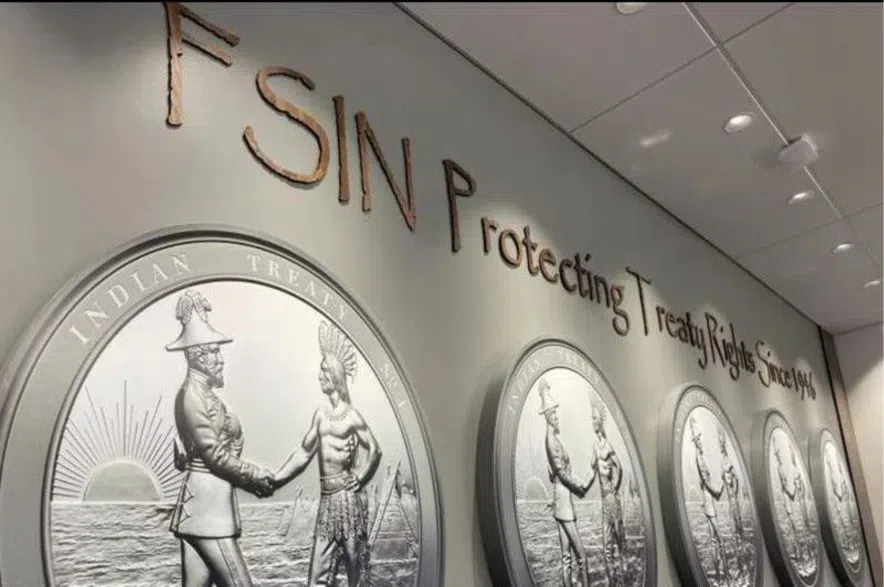
Last week the Federation of Sovereign Indigenous Nations (FSIN) held its first general assembly meeting since the federal government asked the organization to pay back nearly $29 million in funding.
The meeting was held behind closed doors and policy analyst and government relations expert Jennifer Laewetz was one of the people who weren’t allowed in.
She joined The Evan Bray Show on Monday to unpack concerns surrounding the FSIN, citing a lack of accountability and transparency.
Read more:
This interview has been edited for length and clarity
Evan Bray: Were you at FSIN’s General Assembly to find out how they were going to deal with the money they’re being asked to repay by the feds?
Jennifer Laewetz: That’s correct. I was there to hear what was going to happen with the resolutions. I work for a couple of the chiefs that were in that room, and my own Nation was in that room.
Bray: Were you approached by someone and asked to leave? Did you see this happening to other people as well?
Laewetz: It started getting a little bit heated because there were conversations around the amendments to the Financial Act. There was a chief that was airing grievances and his concerns at the mic. Security came up to me — the same security company that is hired by Métis Nation Saskatchewan, which I’m also banned from — and said ‘you are being asked to leave.’
He knew my name, and I asked is there a reason for this? He said ‘no, you didn’t do anything, this direction is coming from the executive.’ I’m like, OK this is really strange. Then one of the chiefs I work for came up and said she’s not leaving because everybody else is here. Then about 10 minutes everyone else was asked to leave.
Bray: I’ve been to meetings where they’ll have a closed door (in camera) portion of the meeting, is this a step away from the norm?
Laewetz: I think so, because as far as I know there wasn’t a motion to move in camera. Those are the types of things where those processes need to be followed. If you’re moving in camera, that’s fine.
When we’re hearing a chief that’s already in the middle of airing his grievances and there’s a lot of chatter going on, and then all of a sudden everyone needs to get out … it seems to be a knee-jerk reaction. That’s where things start to get concerning.
Bray: There’s some very stark differences in the way people are looking at this. Talking with other people who do jobs similar to yourself, do you have a sense of where the mood is in the province? Is it as fractured as it appears to be on this topic?
Laewetz: I think so, and given how much I’m out there publicly, there’s multiple different layers to this. There’s the relational portion of how we deal with one another as Indigenous people — a lot of us are connected. A lot of us, our communities are connected. People don’t want to turn on the people that they respect or care about.
The other layer is the fact that there’s people who are scared. That’s a really big common theme where I get people messaging me privately or coming up to me and they want to have these conversations, but they’re scared to speak out.
Then there’s people saying, ‘I have to speak now, and I need to be vocal,’ and they need to be loud about it. I think that’s what you’re seeing here with leadership across Saskatchewan.
Bray: There’s this call for financial accountability, and accountability in general. I had Saskatoon Tribal Chief Mark Arcand on the program just over a week ago and he was quite outspoken about some of the ways decisions are made and some of the lack of transparency that’s coming from FSIN, even though he has a role on the Treasury Board. Are there others inside the FSIN and organization that are expressing these concerns?
Laewetz: I don’t think he’s alone in this. I’ve talked to a number of chiefs before the assembly that were very concerned about the lack of transparency and accountability because those are core pillars. They’re not negotiable.
I think one of the issues here is, despite what anyone feels about this issue, you cannot deny that it is a huge, fundamental problem that chiefs were not getting things like the resolutions ahead of time with a lot of time to review them, and things like agendas. There were chiefs finding out about resolutions and amendments to the Financial Act through leaked posts on social media. That is a massive problem.
We’re talking about changing the core foundation of their governing document, and people are finding out about it, especially leadership through social media. That’s a huge problem.
Bray: Were there amendments that did come about in this meeting to the satisfaction of those who had concerns?
Laewetz: There were some resolutions that were apparently going to attempt to be put forward that were protecting whistleblowers, that sort of thing. Those did not go through. The amendments to the Financial Act that bring in what I like to call more silencing tactics like NDAs (non-dosclosure agreements) and things like that did go through.
BRAY: Those non disclosure agreements got signed?
Laewetz: That resolution was passed, and whether those chiefs have now signed it, I don’t know.
Bray: Do you see some discrepancies in terms of how the FSIN is managed versus what we would see with a level of government like provincial or federal?
Laewetz: Absolutely. We have to be careful that we’re not trying to promote the structure of the federal and provincial or municipal governments when those are not our systems, but at the same time there are core components of our systems that are in direct relationship with those other bodies of government
When we’re talking about an organization that is funded by the federal government, and inadvertently, taxpayers, that’s how things work — there’s a level of respect and understanding that needs to be there on our part as well.
For the people that help fund these organizations that are supposed to benefit us, they’re supposed to give us a seat at the table with Canada and other levels of government on things like treaty rights and education and justice and health.
Bray: What does a good path forward look like?
Laewetz: When it comes to transparency, trying to silence people and to over-manage bad press is not the road to go.
Admit your fault, let’s see how we can strengthen these systems, because we are living in the era of modern technology and social media, and our people are getting more involved now, more than ever.
We saw right after the assembly people were already demanding to know which chiefs voted in favour of the financial amendments. People are paying attention.
I think the path forward right now is working with the concerns and the criticism and building up our systems and not pushing people out that genuinely want to know about how these organizations run, which one day our kids will be responsible for.
Bray: You have said you feel Indigenous women aren’t welcome in these spaces. I know we’re seeing more and more Indigenous women as chiefs of First Nations in the province. Have you had discussions with some of those leaders about that point?
Laewetz: I have, and it’s hard, because I hate being that person that has that cop out. I’m not a victim in any sense. There is this undeniable force that exists against strong Indigenous women in this space. Even with First Nations political commentators we’re very outnumbered. We don’t exist in large numbers.
It’s an unusual thing to see strong First Nations, women using modern social media, Tiktok, that sort of thing in the political space. You notice how you’re treated differently. I won’t lie, it is intimidating when I’m not a big person, I’m not a disruptive person, and I’m standing in the back of the room, and I have security that is standing next to me the minute I walk in, and they’re following me around, and then suddenly they know my name and they’re asking me to leave. It is intimidating.
NOTE: According to a statement from Indigenous Services Canada, the FSIN has submitted documentation in response to the letter sent to the organization in February requesting additional supporting information in relation to the audit.
“In terms of next steps, our officials are currently reviewing the documentation provided. We will reach out to the FSIN once our review has been completed to determine any next steps,” the federal government said.
Read more: