


Evan Bray: What would 'associate' EU membership mean for Canada?
There's been a lot of talk about Canada possibly becoming an "associate member" of the European Union. Evan Br...
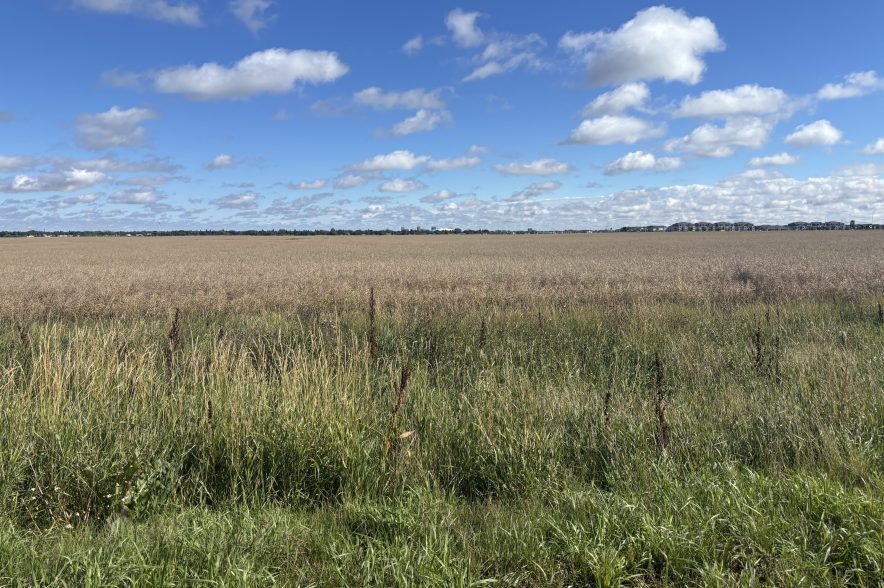
After a promising start to harvest, Nick Cornea is getting tired of watching rain clouds roll across his fields.
Cornea, who farms near Drinkwater, said August provided a good window to get crops off the field. He harvested his red and green lentils, along with some of his durum.
Read more:
“We had a good stretch in August. We got some of the durum off in good quality, and all the lentils came off, and they looked really good,” Cornea said. “And then the taps turned on, and it seems like they don’t want to turn off now.”
Asked how he feels about the inconsistent weather, Cornea joked that he’s had enough.
“I’m quite over it,” he said. “I’m debating if a phone call to a local auction mart would just put these woes away for me.”
His farm is now about 55 to 60 per cent finished with the harvest.
That’s significantly behind where his operation was at the same point last year, when Cornea estimated between 80 and 90 per cent of the crop had already been harvested.
Still, he isn’t ready to panic.
“It’s not Nov. 15 yet, and it isn’t starting to snow, so there’s not a whole lot of worry,” Cornea said.
He said farmers can spend September fighting to harvest grain between periods of wet weather, only for a late stretch of heat in October to provide more time than expected.
“There’s lots of times you get that late heat wave in October where we fight all September trying to get dry grain, and then come October, it’s like, ‘Why did we panic?’” he said.
For some farmers around Drinkwater, the concern isn’t simply how long harvest will take.
It’s what condition their crops will be in when combines can finally return to the fields.
Cornea said he’s hearing concerns about durum beginning to sprout and canola deteriorating after repeated moisture exposure.
“We’re optimistic but pessimistic at the same time,” he said.
“There’s guys’ spirits are broke with all this rain and worrying about, like, the durum sprouting and the canola,” Cornea said.
He said some farmers are concerned the quality could deteriorate enough that they begin questioning the value of harvesting what’s left.
“Guys are worried that it’s going to be such poor quality once we get back out there,” he said. “Is it even worth finishing it, kind of thing?”
The uncertainty comes as Cornea is also keeping a close eye on what it costs to keep his operation running.
He said high fuel costs and weaker grain prices have made managing expenses particularly important this harvest.
“It’s tough to make it go right now,” Cornea said. “It’s worrisome. Like, it definitely is something that you gotta mind.”
He learned that lesson from his grandfather.
“My grandpa always used to say, ‘Take care of your pennies; your dollars will take care of themselves,’” he said. “So we’re giving extra care to our pennies right now.”
Cornea can still find some humour in the situation.
“I’m not telling the kids it’s imaginary Christmas yet,” he joked, “but I mean, we might have Spam instead of turkey.”
Right now, Cornea’s ideal forecast is simple: heat and wind.
He said temperatures between 24 C and 29 C, combined with winds of around 30 to 40 kilometres per hour, would help dry things out and allow farmers to spend more time in the field.
Heavy morning dew and persistent humidity have shortened the daily harvesting window.
“It is like noon or even 2 o’clock before things get to a dry enough point that we can go,” Cornea said.
Despite the weather, uncertain crop quality and financial pressure, Cornea said none of it has changed how he feels about farming.
“Farming’s in my blood. It’s a lifestyle I love,” he said. “You can’t like, even in the bad years you just can’t beat farming. I love it.”
For now, he’s waiting for the weather to co-operate and hoping he won’t still be sitting at roughly the same point a month from now.
“Call any time if you need another one Oct. 15,” Cornea joked, “when I’m still at 60 per cent.”