Murray Wood: 'One of the worst' should be on hats and T-shirts in Canada
U.S. President Donald Trump called Canada "one of the worst" this week, saying that soon we will come to him t...
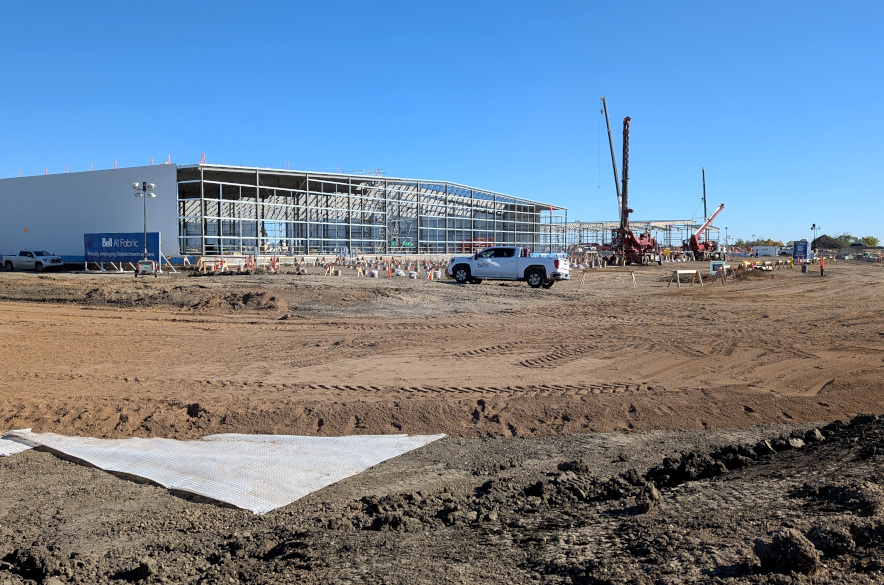
As colder weather approaches, the Bell AI Data Centre just outside Regina is well on its way to beginning operations in 2027.
On Thursday, the provincial government and Bell hosted local leaders at the construction site to show off the progress that’s been made.
Four buildings on the site are taking shape, with heavy machinery erecting steel framing and one building far enough along to have siding across much of its exterior.
John Watson, group president at Bell, called the pace of development extraordinary.
“It’s been probably fastest in Canada, fastest in the world – something we should be proud of,” he said.
The first two buildings are expected to be completed, outfitted and operational in the first half of next year.
“Our commitment to our customers is to have the first two buildings set up and ready to go, and that is an extraordinary timeline, and it’s facilitated by the amazing trades we’ve got here and the commitment and work ethic that we’ve seen,” he said.
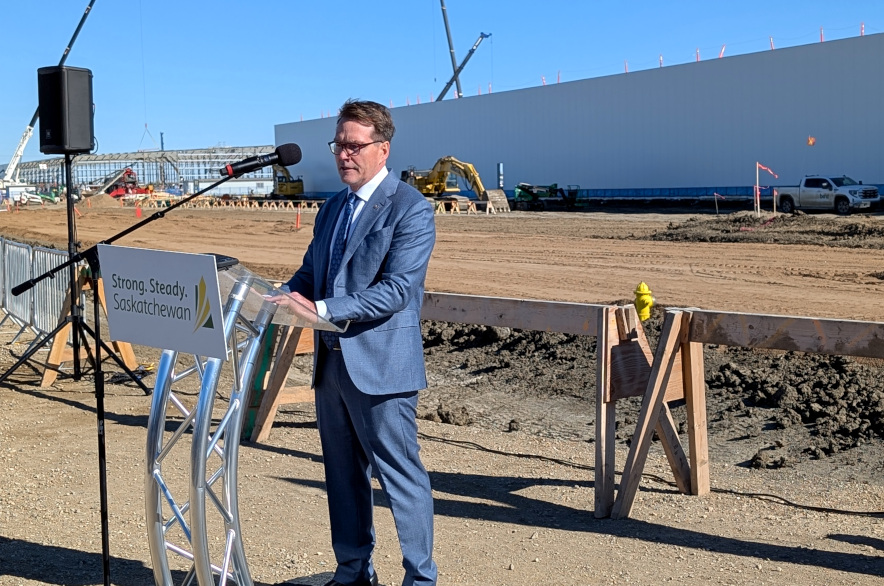
Bell Canada Group President John Watson. Oct. 1, 2026 (Lisa Schick/980 CJME)
Watson was asked a number of questions about the four-fold expansion of the data centre but couldn’t answer most of them with much detail.
He said Bell isn’t at the point of sharing what the size of the site will be with the expansion, though he did say it would likely double, or a little more than double, the size of the current site.
He couldn’t say exactly where the expansion would be, but he did say it would be in proximity to the current site because of the infrastructure in the area.
“There’s really good natural gas access here. We’ve got the trades folks, we’ve got the linkage to the city in terms of commerce jobs, and all of that’s very beneficial if it’s within this area,” Watson said.
As for the 900MW natural gas power plant Bell will have to construct to power the expansion, Watson couldn’t give a timeline for its construction.
He said the announcement just happened and they still have to get through a number of steps and requirements in several areas.
“The details aren’t locked today – this is so new that we’ve got to work those through with the community,” said Watson.
The data centre’s two largest customers remain American companies, but Watson said the company’s bias is still to sovereign Canadian customers – Bell, the provincial and federal governments have made a big deal about the data sovereignty importance of this project.
“We’ve been knocking on doors for almost two years – government, provincial, large financial institutions, insurance companies, to look at the sovereign landscape, to look at the opportunity, to look at the compute required,” said Watson.
He said they’ll have to have some patience in the readiness of those companies to require the sovereign space and workloads from Bell.
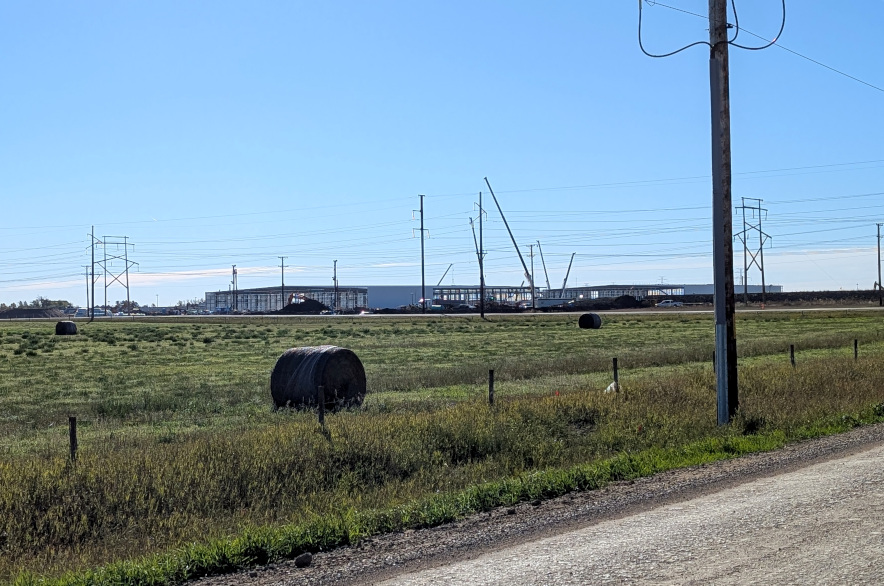
The view of the Bell AI Data Centre just outside Regina from the grid road leading to it. Oct. 1, 2026 (Lisa Schick/980 CJME)
Watson said a third party will help to develop the 900 megawatt (MW) power plant and to run it, and Bell is speaking with a number of possible partners.
The size of the plant, producing 900MW, would be the largest power plant in Saskatchewan – SaskPower’s largest doesn’t top 600MW.
Watson said Bell will abide by all the current regulations in Saskatchewan around power generation and emissions.
However, last year the province unilaterally cut the carbon tax from large emitters, and because the power will all be used on location and won’t be fed into the public grid, the plant won’t be subject to the federal government’s Clean Electricity Regulations.
The work happening right now for the first phase of the project includes the construction of a new pipeline and a meter station. SaskEnergy said plans for the power needs on the expansion are too preliminary to share details.
SaskPower is providing the 300MW of power for the project’s first phase and said it will be finished with building 200MW of transmission capacity by the end of this year. Work to provide the other 100MW is expected to be finished by the end of 2027.
The project will connect to the Regina Switching Station during the first phase. The second phase will also connect it to the Rowatt Switching Station.
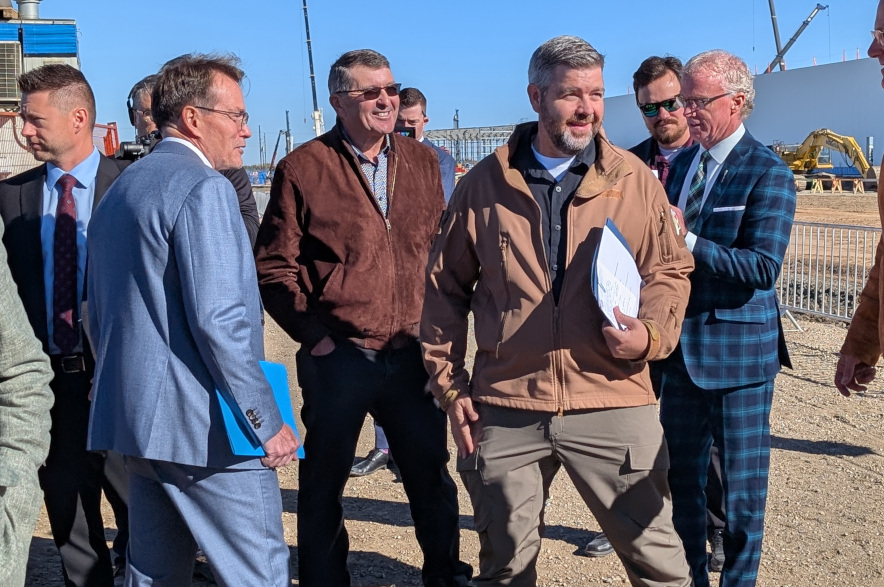
Local leaders and politicians gather at an event for the Bell AI Data Centre. (L to R) Regina Mayor Chad Bachynski, Bell Group President John Watson, RM of Sherwood appointed Reeve Ray Orb, CIC Minister Jeremy Harrison, MLA Brad Crassweller. Oct. 1, 2026 (Lisa Schick/980 CJME)